How AI is Reshaping Modern Warfare — And Why That Should Concern Us
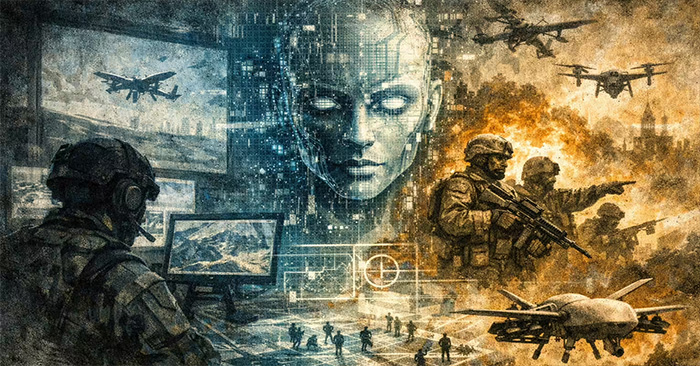
Reports suggest that recent U.S. and Israeli airstrikes targeting Iran relied on Anthropic's Claude AI tool — a striking indicator of how deeply artificial intelligence has woven itself into modern combat. Today, AI influences nearly every phase of military operations: intelligence gathering, tactical planning, even propaganda campaigns. It's a shift that's happening faster than most people realize.
As American and Israeli forces continue military operations against Iranian targets, artificial intelligence has become central to how modern armies wage war.
What's particularly interesting here is the contradiction: the Trump administration and Defense Secretary Pete Hegseth view Anthropic as a supply chain risk, yet the company's AI tools — including Claude — allegedly played a crucial role in these military strikes. The U.S. government seems willing to overlook security concerns when AI gives them tactical advantages.
Multiple sources confirm that AI assisted across the entire operational spectrum. It helped identify targets, supported legal review processes, and even guided strike execution. The result? Decision-making cycles that operate at speeds previously impossible on the battlefield.
Some accounts claim AI was deployed in the initial missile campaigns against Iran, including operations code-named Epic Fury and Roaring Lion. These strikes reportedly resulted in the death of Iran's Supreme Leader Ali Khamenei, who had held power for nearly four decades.
AI Powers Intelligence Analysis and Data Processing
One of the oldest — and most effective — military applications of AI is crunching intelligence data. And it works remarkably well.
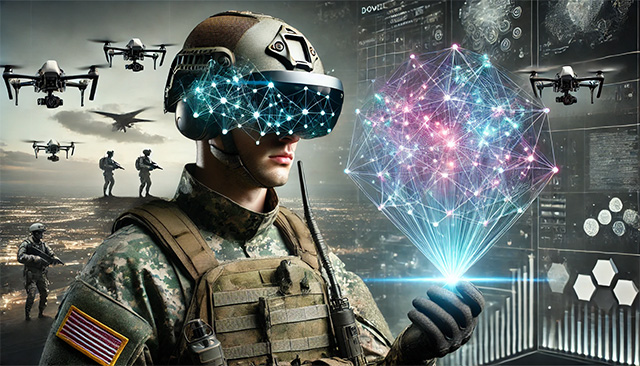
The Pentagon's Project Maven stands as a landmark initiative. The system uses machine learning to analyze aerial reconnaissance imagery and sensor data, enabling intelligence officers to spot patterns and objects far faster than humans ever could. Traditional analysis methods become obsolete overnight.
Palantir Technologies, the government contractor behind Project Maven, has long championed AI in military contexts. CEO Alex Karp has consistently emphasized that America must leverage AI to establish strategic advantages in how it deploys forces and understands the battlefield.
Israel's Defense Forces have similarly acknowledged using advanced data analysis systems and AI tools to process intelligence and prioritize targets during operations in Gaza.
The Russia-Ukraine conflict further demonstrates AI's real-world battlefield impact. Both sides have deployed intelligent weapons systems and data analysis tools extensively throughout the conflict.
Autonomous Weapons and the AI Military Debate
Ukrainian forces have gained tactical ground by deploying drones equipped with computer vision and autonomous navigation software. These systems identify and track targets with minimal human input.
The technology is remarkably sophisticated. These drones operate effectively in chaotic combat environments where GPS signals get jammed, making them nearly impossible to neutralize through traditional countermeasures.
Meanwhile, Western defense contractors continue developing loitering munitions — essentially AI-powered kamikaze drones — that can autonomously search for and strike targets like radar systems or armored vehicles.
Despite semi-autonomous weapons becoming commonplace on today's battlefields, Anthropic maintains that fully autonomous weapons systems aren't ready for deployment. This stance has created growing friction between the company and the U.S. government over years-long military collaboration programs.
Dario Amodei, Anthropic's CEO and co-founder, believes AI is vital for protecting America and democratic nations. But here's his concern: current AI systems simply aren't reliable enough to operate fully autonomous weapons independently. The real concern is accountability and safety.
Amodei has stated clearly that Anthropic won't supply products that could endanger soldiers or civilians. He's also mentioned that Anthropic proposed research partnerships with the Pentagon to improve military AI reliability — proposals the government hasn't accepted. His position is straightforward: without proper oversight mechanisms, fully autonomous weapons cannot replace the judgment of trained military personnel.
AI and Deepfakes: The Information Warfare Frontier
In the deepfake era, controlling the narrative across global media has never been easier. When political tensions run high, organized deepfake campaigns can shape public opinion with remarkable speed.
As tensions with Iran escalated, social media flooded with fabricated images and videos. One prominent example showed the USS Abraham Lincoln (CVN-72) supposedly damaged by Iranian attacks.
These fake images forced the U.S. Central Command to publicly debunk the misinformation on X (formerly Twitter). Their statement confirmed the Lincoln suffered no attacks and that Iranian missiles never came close to their target. The carrier continued supporting military operations normally.
Videos circulating widely showed American soldiers returning home in flag-draped caskets. While the images themselves were real, they were recycled from the Iraq War years earlier. Context was stripped away to suggest recent casualties.
Another viral video claimed to show an American fighter jet shot down. Later investigation revealed it was footage from a military video game, not actual combat.
These examples reveal something crucial: AI's role in modern conflict extends far beyond the battlefield. It reaches into cyberspace and information warfare, where AI tools spread political messaging and reshape global public opinion. The real battle might not be won with missiles — it might be won in the minds of people worldwide.
Related Articles
- Arc Browser Now Available on Windows 10, ARM Version Coming Soon
- Microsoft Unveils Windows 11 LTSC 2024 Minimum System Requirements and Supported CPU List
- Windows 11 to Automatically Enable BitLocker Encryption on All PCs
- Over 11 Million Android Devices Infected with Malware Distributed Through Google Play
- Which Smartphones Emit the Highest Radiation Levels Today

No Comment to " How AI is Reshaping Modern Warfare — And Why That Should Concern Us "