Specification Engineering: The Next Critical Skill Beyond Prompt Engineering
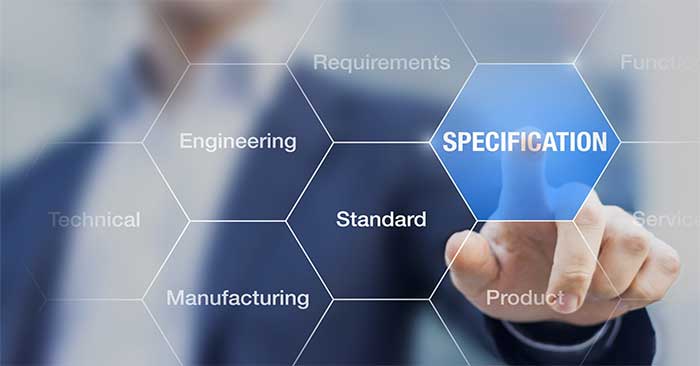
Over the past two years, people have gotten better at squeezing quality results out of large language models by writing clearer prompts: adding context, defining roles, including examples, specifying output formats, and constantly iterating. These techniques still work. But as AI moves beyond chatbots into coding agents, research assistants, data science tools, and automated workflows, good prompts alone aren't cutting it anymore.
The emerging skill is called Specification Engineering—essentially the discipline of building detailed requirements for AI systems. It's the ability to clearly define goals, constraints, desired outputs, edge cases, testing methods, success criteria, and failure scenarios for AI-assisted tasks. Here's the key difference: Prompt Engineering is how you ask the question, while Specification Engineering is how you define what "done" actually looks like.
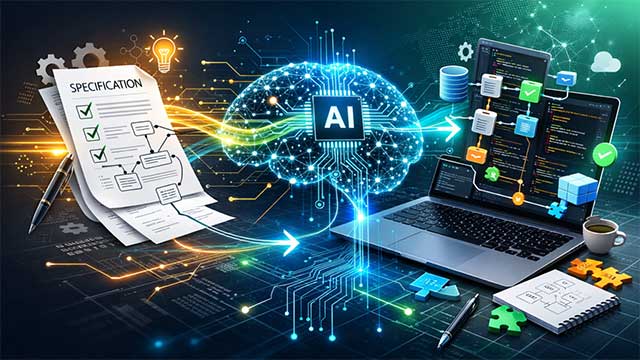
Why Prompts Stop Being Enough
A prompt can produce an answer that sounds entirely convincing. A specification is what actually determines whether that answer meets requirements.
This distinction matters increasingly because modern AI doesn't just generate text. It writes SQL queries, edits codebases, analyzes spreadsheets, structures JSON output, builds applications, and executes multi-step decision chains. In scenarios like these, you can't just ask "Can the model answer this?" You need to ask: Does it meet the actual requirements? Does it respect constraints? Does it handle edge cases? Can you verify the results? Can other systems use the output? Is the AI optimizing for the wrong thing?
That last question is particularly critical. AI safety researchers have long studied specification gaming—when an AI system technically completes the stated goal but ignores what humans actually wanted. What's interesting here is this isn't some theoretical risk anymore. It's happening in everyday work. A coding agent asked to "fix bugs" might create a patch that passes visible tests but breaks hidden system assumptions. An AI summarizing a report might produce coherent text while completely missing the metrics leadership cares about. When asked to "clean data," it might silently remove rows that should have been preserved for investigation.
The prompt did its job. The specification is what failed.
What Specification Engineering Actually Is
Specification Engineering is the process of turning a vague task into a set of executable, testable, and evaluable instructions.
A simple prompt might read:
"Analyze this customer churn dataset and tell me what stands out."
A complete specification would require:
"Analyze this customer churn dataset. Identify missing values, class imbalance, data leakage risks, and the highest-predictive features. Split data into train and test sets before preprocessing. Compare logistic regression, random forest, and XGBoost. Report accuracy, precision, recall, F1, ROC-AUC, PR-AUC, and confusion matrices. Do not draw causality conclusions. Provide three business recommendations linked only to observed correlations."
The second version isn't just a better prompt. It defines the entire job.
A solid specification typically includes eight core components:
Objective: What must the model accomplish?
Context: What information does the AI need to know?
Inputs: What data, files, tools, or assumptions are allowed?
Output Format: How must the final result be presented?
Constraints: What must the AI avoid?
Evaluation Criteria: How do you know the result is correct?
Edge Cases: What scenarios could cause failure?
Verification Steps: What tests or checks must be run?
This explains why Specification Engineering has so much in common with product management, software testing, data validation, and research design—not traditional prompt-writing technique.
A 2024 study on Requirement-Oriented Prompt Engineering found that most current prompt training programs focus on techniques like role-playing or asking AI to "think step by step." But actually using LLMs for complex tasks depends far more on clearly articulating requirements. In a randomized study with 30 inexperienced users, the ROPE-trained group improved their requirement-writing skills by 20%, while the traditionally trained prompt engineering group improved just 1%. The researchers also found a direct link between input request quality and LLM output quality.
We're seeing similar trends in real-world AI tools. OpenAI's Structured Outputs feature lets developers constrain model responses to specific JSON schemas—a capability emphasized in OpenAI's own benchmarks. This is Specification Engineering at the API level: instead of hoping the model returns valid JSON, you predefine the structure all results must follow.
OpenAI's Model Spec and Anthropic's Constitution express the same idea at the model behavior level. Model Spec documents how OpenAI's models should behave in ChatGPT and APIs. Constitutional AI uses explicitly written principles to guide model behavior. The real concern is: the AI industry itself is gradually shifting from prompts to specifications.
From Vibe Coding to Spec-Driven Development
This difference shows up most clearly in AI-assisted programming.
A prompt-engineering approach might just ask:
"Build me a simple expense tracker app."
A specification-engineering approach would be far more precise:
"Build an expense tracker in React with add, edit, delete, category filtering, monthly totals, and local storage. Validate that amounts are positive, transaction dates are required, and users must select a category. Write unit tests for add, delete, filter, and total functions. Don't use paid external APIs. Return the file structure first, then implement each file."
The second version gives the AI less room to make decisions that create problems later.
This matters increasingly because software engineering benchmarks are shifting toward real-world problems, test coverage, and verifiability. SWE-bench evaluates how well models handle actual GitHub issues by editing real codebases, not just generating isolated code snippets. OpenAI's SWE-bench Verified is a human-validated subset designed to measure real-world software problem-solving more reliably.
But here's the thing: even passing tests isn't perfect. Research on patches generated by agents on SWE-bench Verified found that passing patches still differed significantly from human-written ones—revealing benchmark blindspots. Another study, SWT-Bench, showed that well-designed test suites act as effective filters for proposed fixes, doubling SWE-Agent's accuracy.
The New AI Workflow
The future workflow with AI won't look like this:
prompt → result → manual fix
Instead, it'll look more like:
specification → generate result → validate → refine → audit
The process might include: writing a specification for the task; asking the AI to identify missing requirements; asking it to generate a solution; running tests or checks; asking the AI to fix only the detected issues; finally documenting assumptions and limitations.
This approach is especially critical for agentic systems. OpenAI's own practical guidance for agents recommends breaking complex resources or tasks into smaller, clearer steps—each tied to a specific action or output. That's Specification Engineering applied to workflows.
Google's DORA research reinforces this trend. A survey of nearly 5,000 tech professionals concluded that AI acts as an amplifier—for both organizational strengths and weaknesses. Strong foundations and quality processes help businesses extract more value from AI. Weak processes get amplified too.
This is what organizations need to understand: AI doesn't eliminate the need for technical discipline. It increases the value of having good technical processes.
Prompt Engineering isn't disappearing. It's becoming part of something larger.
The early era of AI rewarded people who knew how to get chatbots to generate better answers. The next era will favor people who can design trustworthy AI processes—with clear requirements, structured outputs, evaluation mechanisms, and defined boundaries.
The critical skill is no longer:
"How do I get the model to answer?"
It's now:
"How do I define the task so the model, users, and evaluators all agree on what a correct answer looks like?"
That's Specification Engineering. As AI systems become increasingly autonomous, this could become one of the most important technical skills after Prompt Engineering.
Description: Why prompt engineering alone isn't enough anymore. Learn specification engineering—the emerging discipline shaping how teams build reliable AI systems
Related Articles
- 7 Best MCP Clients to Unlock the Full Potential of AI Agents
- Creating AI-Enhanced Lesson Plans with ChatGPT: A Complete Guide
- What Is Loop Engineering? Why It Could Become the Most Critical Skill in AI Coding
- Getting Started with AI Agents: The Fastest Way to Run Local Models
- Securing Your Home Wireless Network: 15 Essential Steps

No Comment to " Specification Engineering: The Next Critical Skill Beyond Prompt Engineering "