8 AI-Powered Workflow Automation Trends to Watch in 2026

Artificial intelligence is everywhere now—powering customer service chatbots, predictive maintenance systems, and just about everything in between. What's remarkable is how quickly AI has become business-critical.
According to Statista, the AI technology market is projected to surpass $800 billion by 2030. Yet here's the thing worth noting: AI works best when it augments human teams rather than replacing them entirely. This emphasis on collaborative intelligence matters enormously when we're talking about real-world workflow optimization.
The ideal setup has machines handling repetitive tasks while humans drive strategy, oversight, and decision-making. This balance becomes crucial as organizations scale AI-powered workflows.
In this piece, we're diving into eight automation trends that will define 2026. We'll look at emerging capabilities, their business impact, and practical ways companies can prepare for what's coming.
AI Workflow Automation Trends
- 1. AI Embedded Directly Into Daily Business Software
- 2. Smart Orchestration Replacing Rule-Based Automation
- 3. New AI-Driven Roles and Cross-Functional Teams
- 4. Organizations Built Around Autonomous Agents
- 5. Multi-Modal Orchestration
- 6. Closed-Loop Automation With Continuous Learning
- 7. Responsible Automation
- 8. Hyper-Personalized Automation
Companies are rolling out AI workflow automation faster than ever before, fundamentally changing how work gets done across industries.
Come 2026, these trends will shape the next generation of AI-driven operations—merging human oversight with intelligent systems to boost efficiency, decision-making capability, and innovation:
1. AI Embedded Directly Into Daily Business Software
AI capabilities are increasingly baked right into the tools people use every day—CRM platforms, project management systems, ERP solutions.
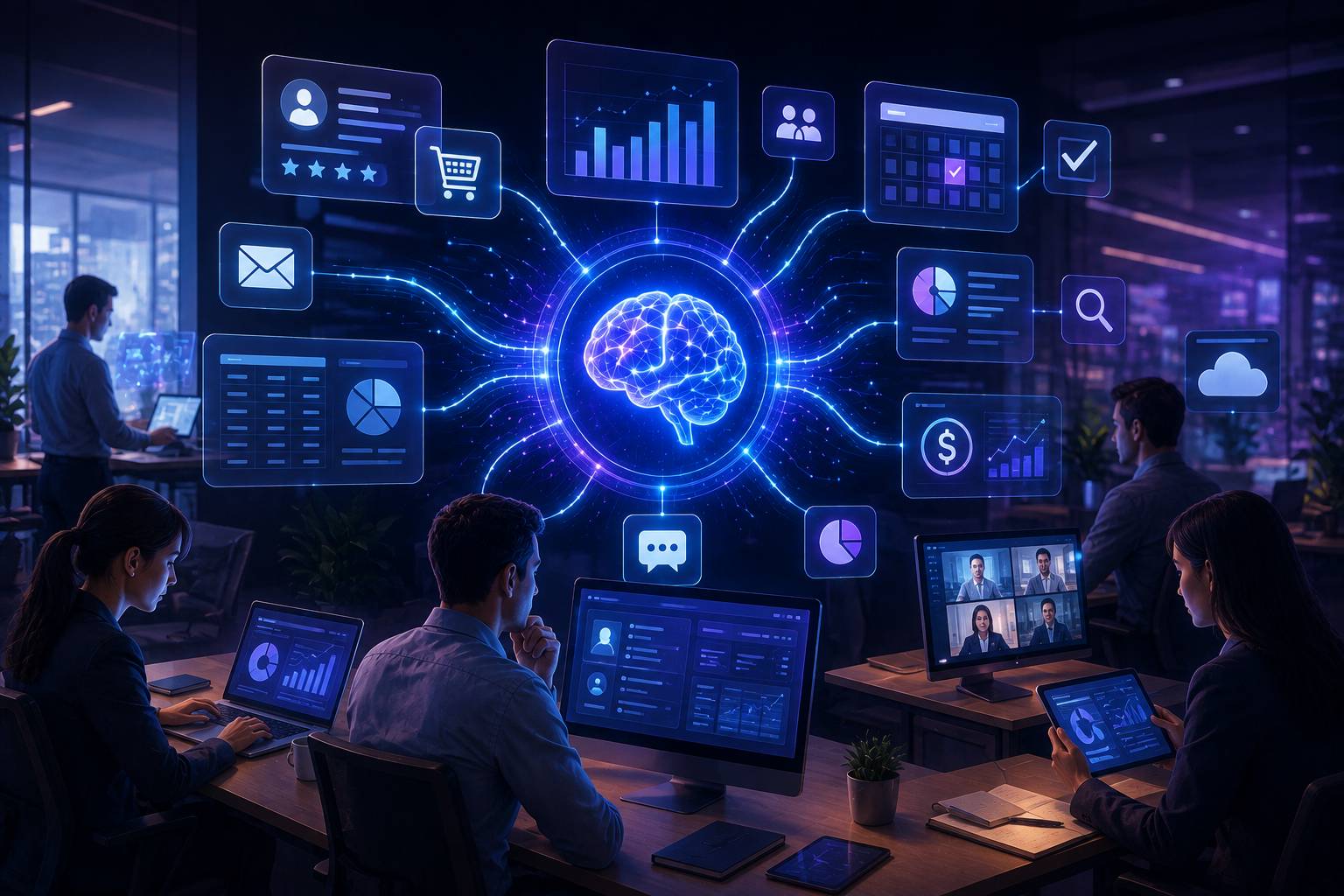
Instead of relying on separate AI platforms, teams now get real-time insights, predictive analytics, and smart suggestions without leaving their familiar interface. This integration eliminates friction and speeds adoption. People can act on data instantly—no context switching required.
2. Smart Orchestration Replacing Rule-Based Automation
Traditional automation runs on fixed rules, but AI-driven orchestration lets systems make real-time decisions across multiple processes simultaneously.
Think of it this way: AI could dynamically route customer requests to the most qualified team member or adjust supply chain priorities based on predictive demand. Workflows shift from static pipelines to responsive, intelligent networks that adapt on the fly.
3. New AI-Driven Roles and Cross-Functional Teams
Companies are creating entirely new positions—AI workflow coordinators, automation architects, data quality managers—to bridge the gap between human work and machines.
Cross-functional teams now collaborate to design automation strategies, monitor outcomes, and refine models continuously. Organizations that cultivate these roles gain real flexibility and ensure AI initiatives actually align with business goals rather than chasing technology for its own sake.
4. Organizations Built Around Autonomous Agents
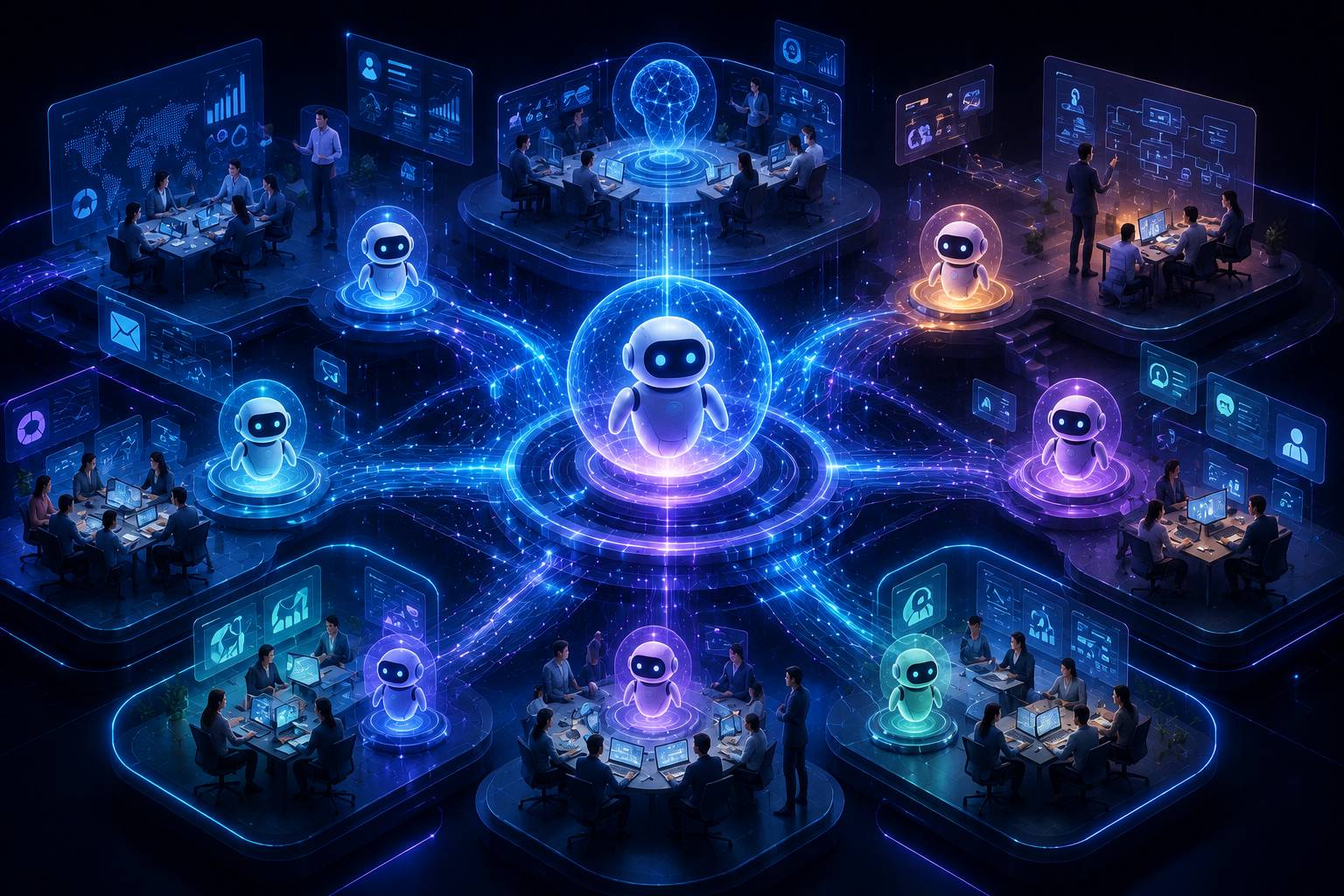
More companies are structuring their operations around autonomous AI agents—intelligent entities that independently execute tasks—rather than simply handing tools to employees.
These agents tackle specialized workflows, make decisions, and coordinate with other agents. This frees human teams to concentrate on strategic or creative work that actually requires human judgment.
5. Multi-Modal Orchestration
Gone are the days when AI systems handled just one data type. By 2026, workflows will seamlessly blend text, voice, images, and structured data all at once.
Picture an AI agent taking a customer voice request, pulling relevant documents, and automatically updating your database—all in one smooth flow across channels. That's multi-modal orchestration.
6. Closed-Loop Automation With Continuous Learning
Closed-loop automation creates a virtuous cycle: execution feeds into monitoring, which triggers feedback, which updates the model. The system learns from results, refines processes, and adjusts predictions nearly in real time.
Continuous observability lets teams track performance, spot anomalies, and fine-tune rules on the fly. Over time, this builds an increasingly intelligent, self-improving ecosystem.
7. Responsible Automation

As AI takes on higher-stakes workflow decisions, governance, explainability, and compliance matter more than ever. The real concern is balancing autonomy with oversight—protecting sensitive data, minimizing algorithmic bias, and meeting regulatory requirements.
Transparent AI builds trust with employees, customers, and regulators while enabling ethical decision-making.
8. Hyper-Personalized Automation
AI will tailor workflows to individual employee and customer needs, automatically adjusting processes for optimal outcomes.
Marketing automation might craft messages based on user behavior. Internal workflows could prioritize tasks around each employee's skills and workload. Personalization boosts engagement, satisfaction, and productivity while maintaining consistency at scale.
Organizations that adopt these strategies don't just improve efficiency—they empower teams to concentrate on high-value work. These trends forge a genuine balance between technology and human insight.
Description: Explore emerging AI automation trends reshaping business workflows in 2026, from embedded intelligence to responsible AI and hyper-personalization.
Related Articles
- Automating Complex Workflows with Claude Code's /goal Command
- How to Use Perplexity's Learn Step by Step Mode: A Complete Guide
- How to Send WhatsApp Messages Directly from Google Gemini
- How to Summarize Google Slides Presentations Using Gemini
- Getting Started with Gemini Live: Your Guide to Voice Conversations with Google's AI

No Comment to " 8 AI-Powered Workflow Automation Trends to Watch in 2026 "