Does Qwen 3.8 Really Match Claude Opus? We Tested It on a Gaming GPU
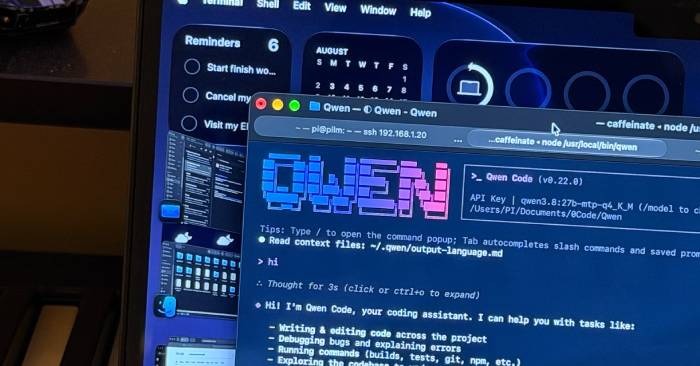
Open-weight large language models just keep getting better, and we're witnessing something remarkable: the emergence of what people are now calling "Mythos-tier" models. These are massive, extraordinarily capable systems that are becoming increasingly difficult to distinguish from cutting-edge proprietary alternatives in real-world usage.
Moonshot AI launched the latest Kimi models with impressive benchmark results. Then came DeepSeek with V4 Pro and Alibaba with Qwen 3.8. But here's what really caught everyone's attention: unlike other new Mythos-tier models, Qwen 3.8 has an official 27-billion parameter variant. That size is small enough to run comfortably on standard consumer GPUs like the RTX 3090.
Local large language models aren't just a novelty anymore. They're becoming genuinely useful for real work. Most people currently use local AI systems for high-volume but simple tasks—usually things that need strict JSON output formatting. But that's changing. Qwen 3.8 27B is genuinely impressive.
Head-to-Head: Qwen 3.8 vs. Claude and GPT
So what happens when you pit a 27B model against vastly larger systems?
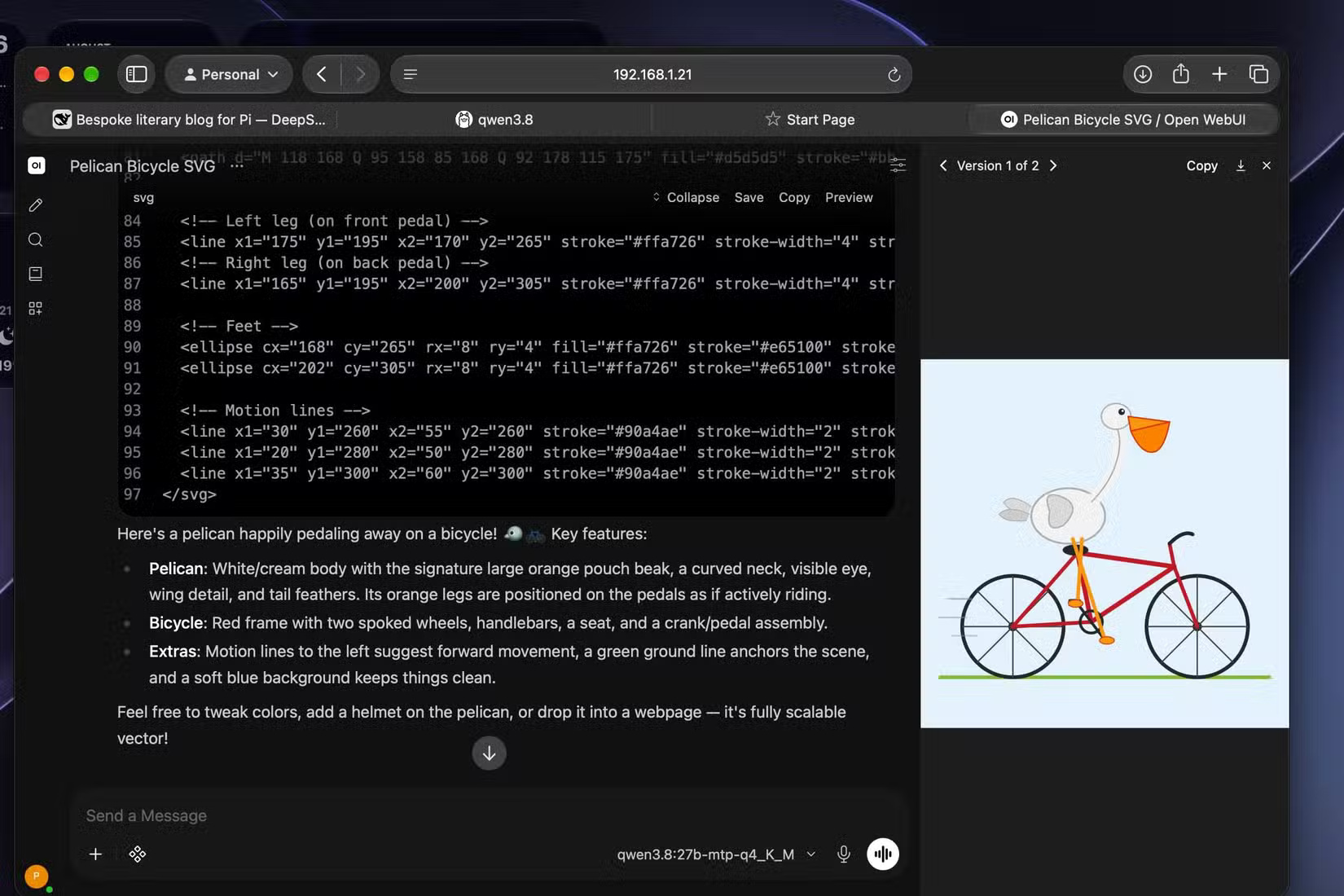
The first thing you do with any new model these days is run the "farmer test." Feed it a simple prompt and see what happens. The result above speaks for itself—genuinely impressive. People were bracing themselves for shortcuts and compromises, fully prepared to excuse limitations because this is a much smaller model. But honestly? We found none. What's going on here?
Take a look at the comparison with other models below. Qwen 3.8 actually outperformed even Claude Opus 5 on this particular test. Now, that doesn't mean Alibaba secretly trained this model specifically to draw better SVG beavers. But it does show that traditional parameter-count comparisons don't tell the whole story anymore.
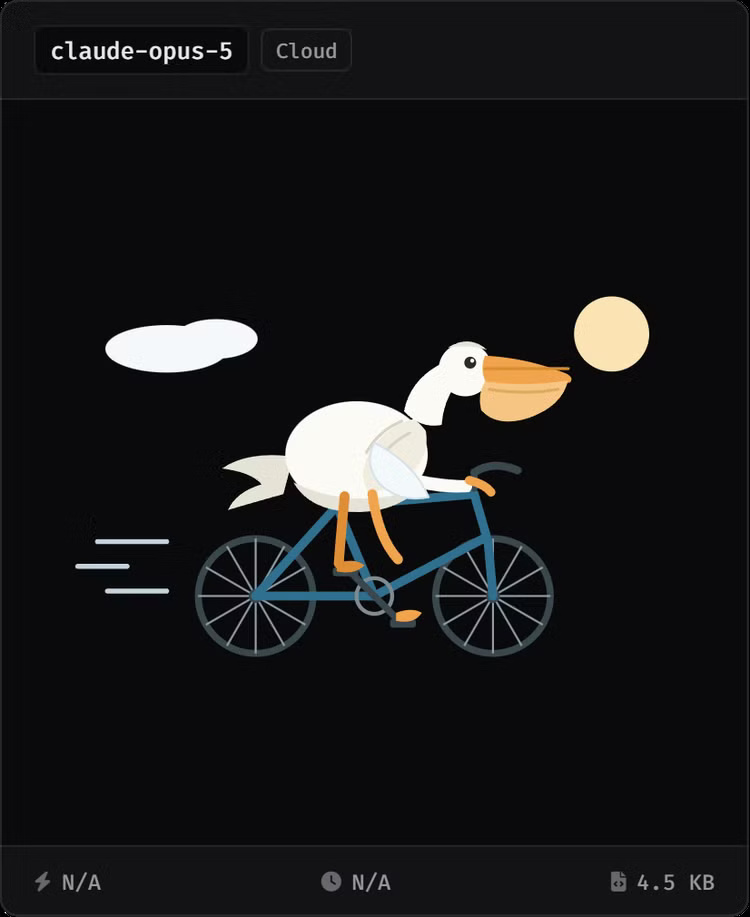
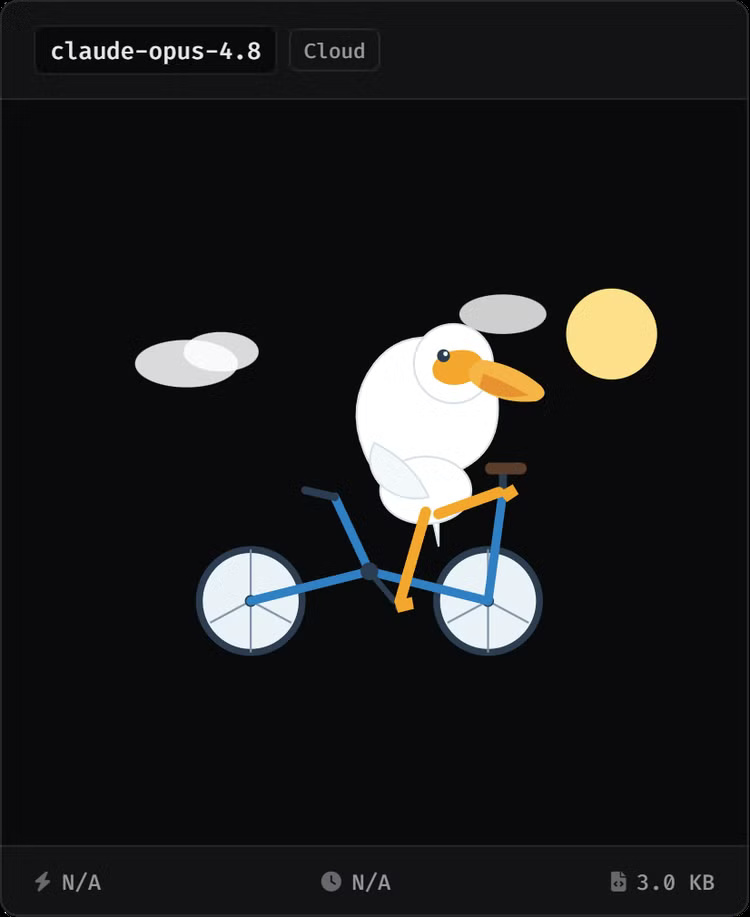
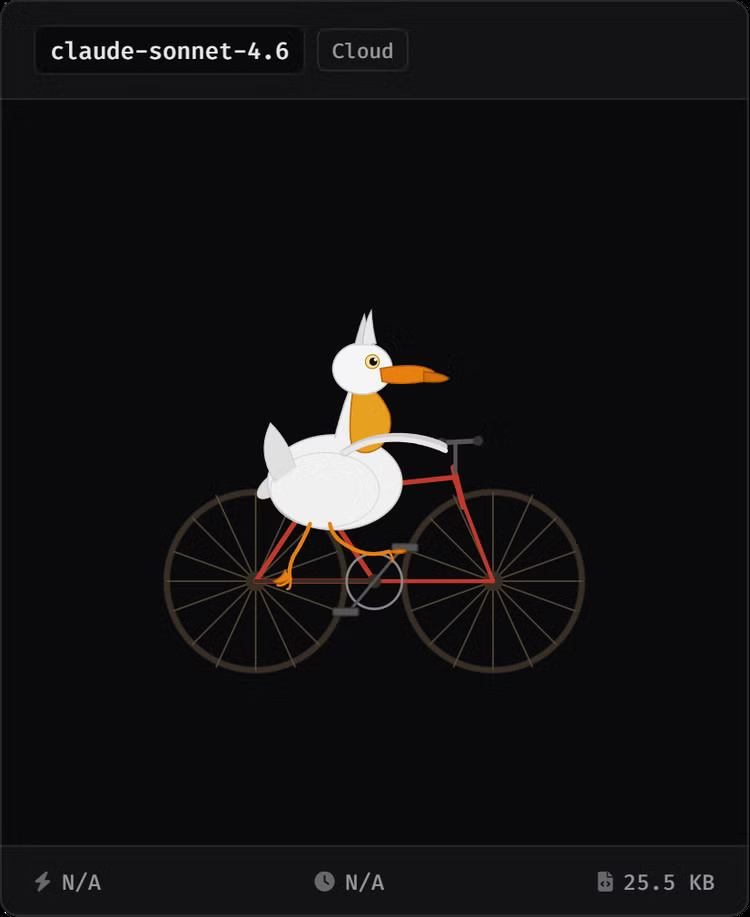
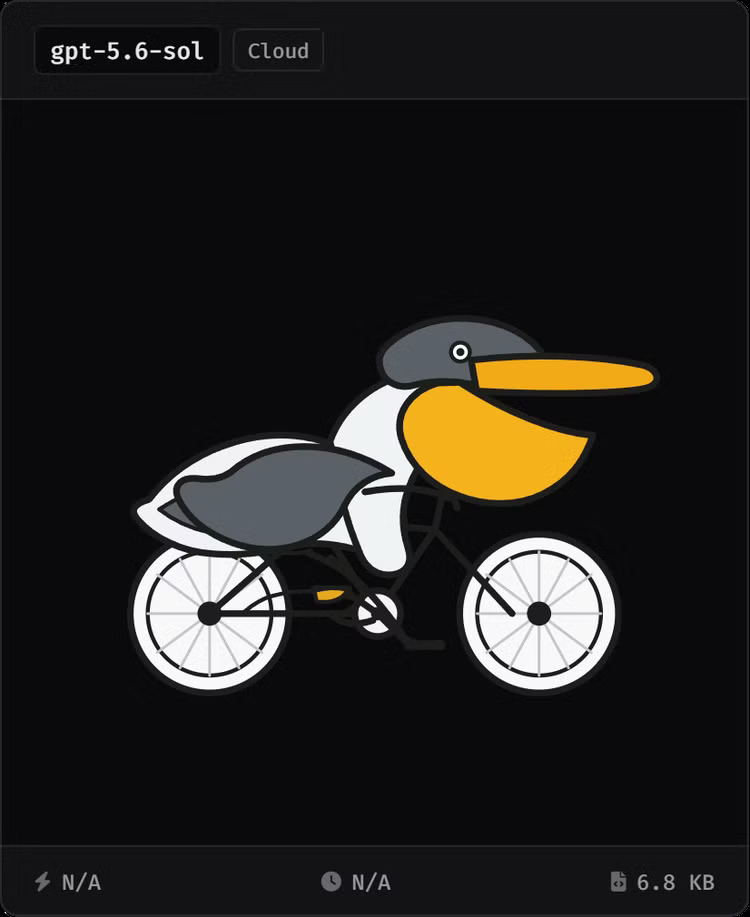
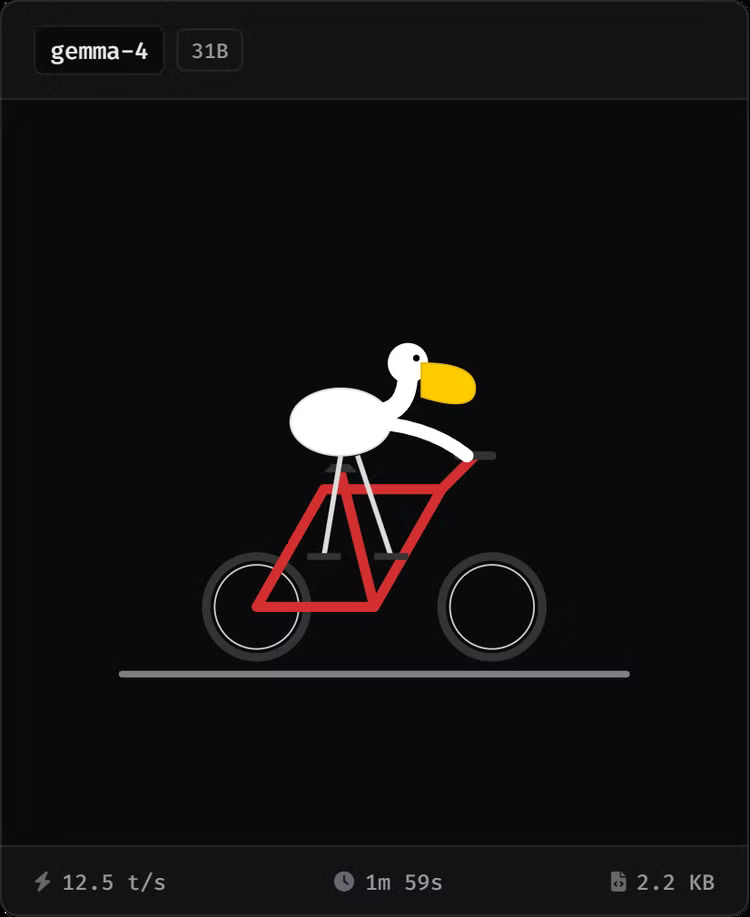
Qwen 3.8 27B is a dense model—meaning all 27 billion parameters are actively working. Despite this, and despite producing that beautiful farmer image, the throughput is blazingly fast. Even on a modest RTX 3090, it hits 75 tokens per second. That's genuinely impressive performance.
Building Out a Full Blog Website
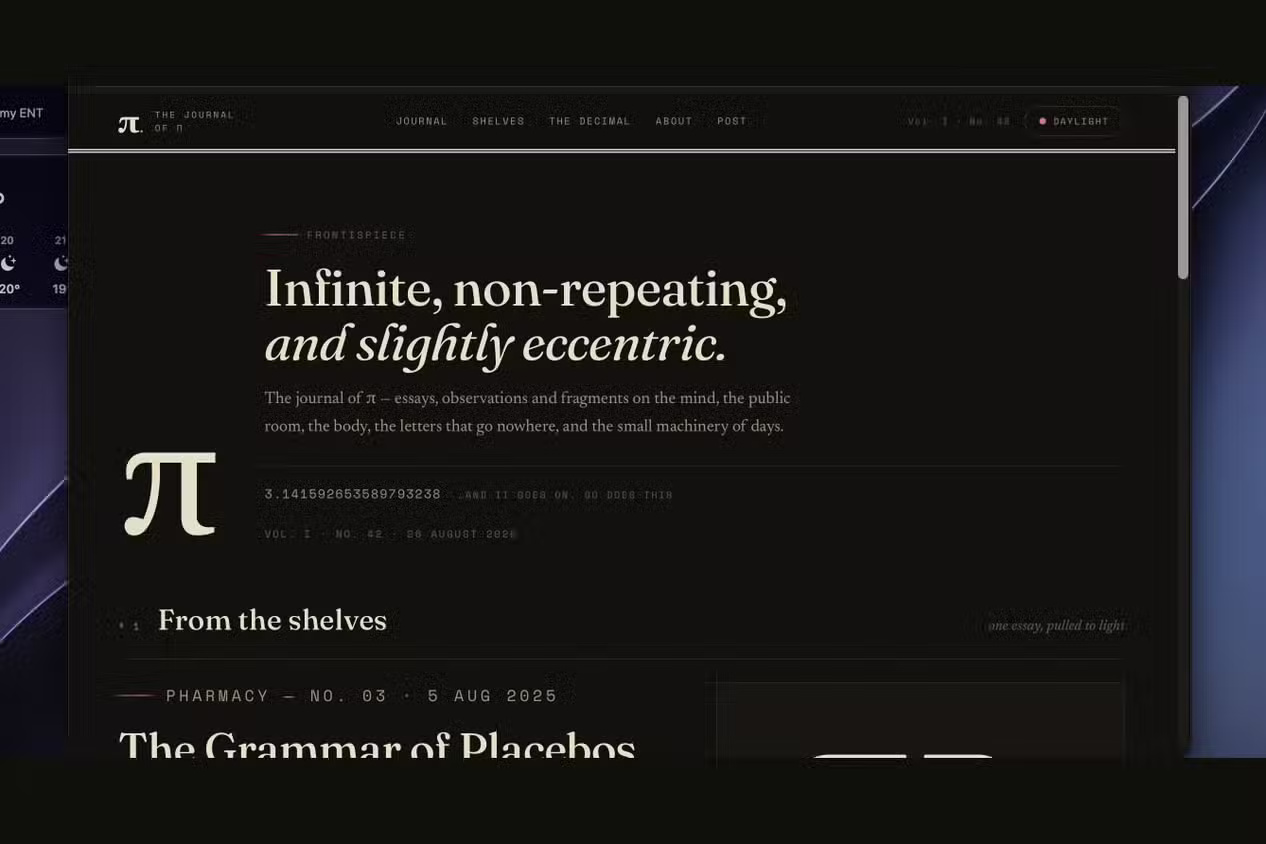
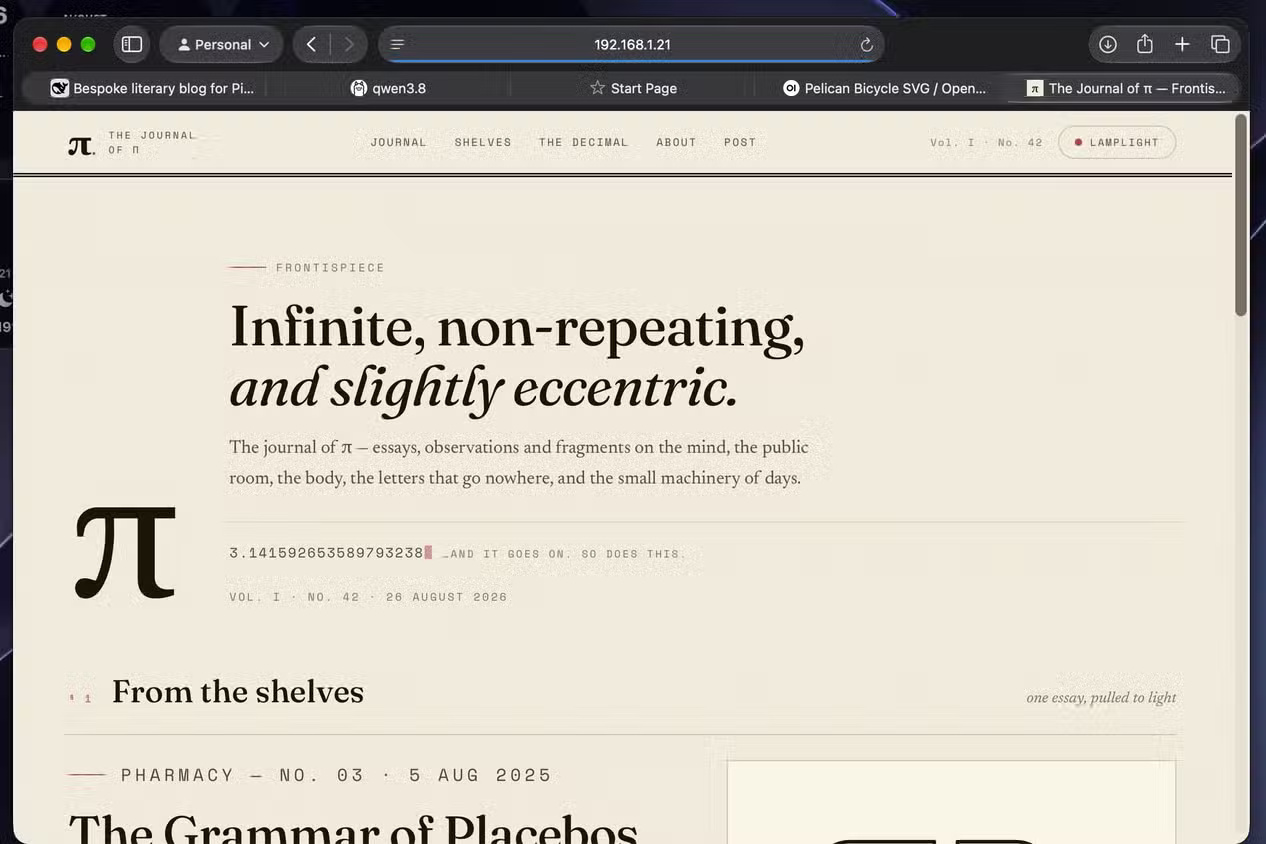
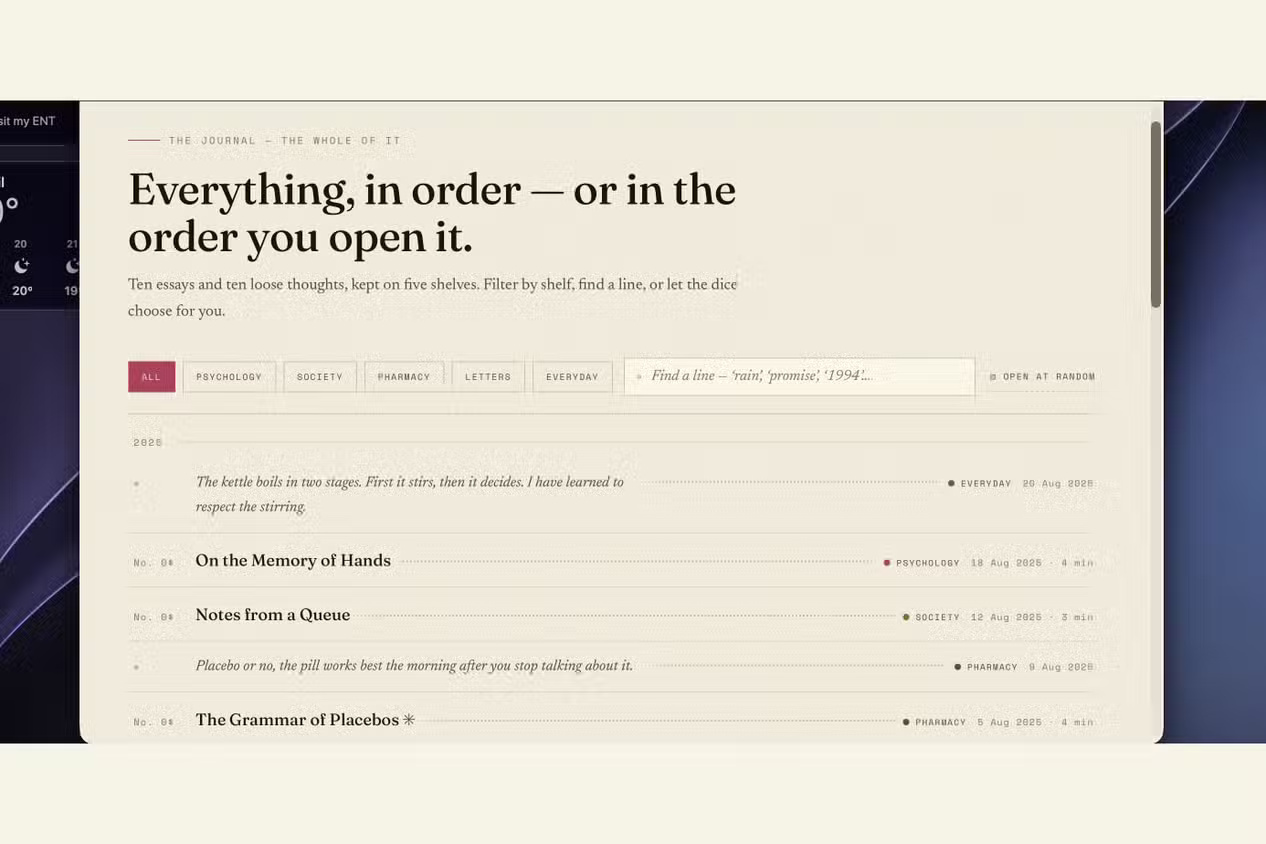
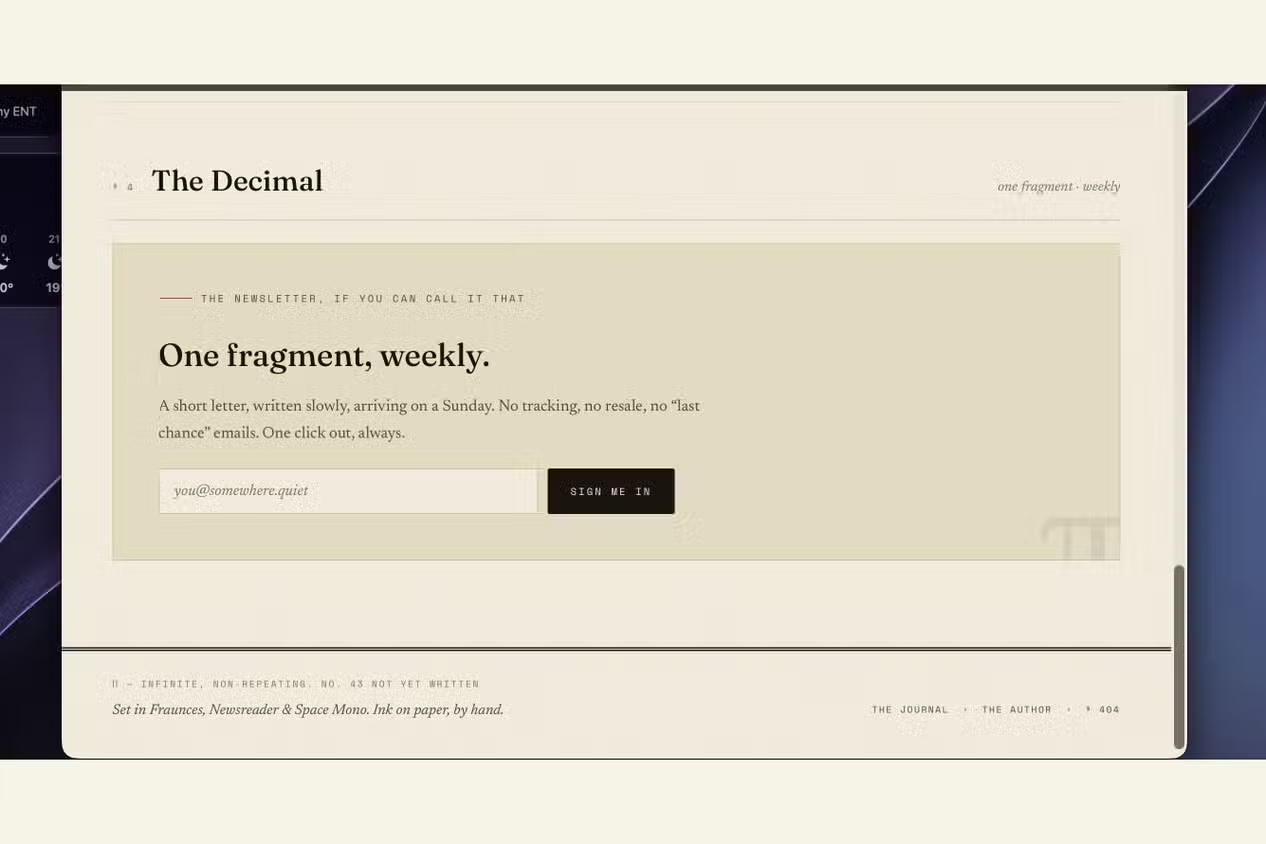
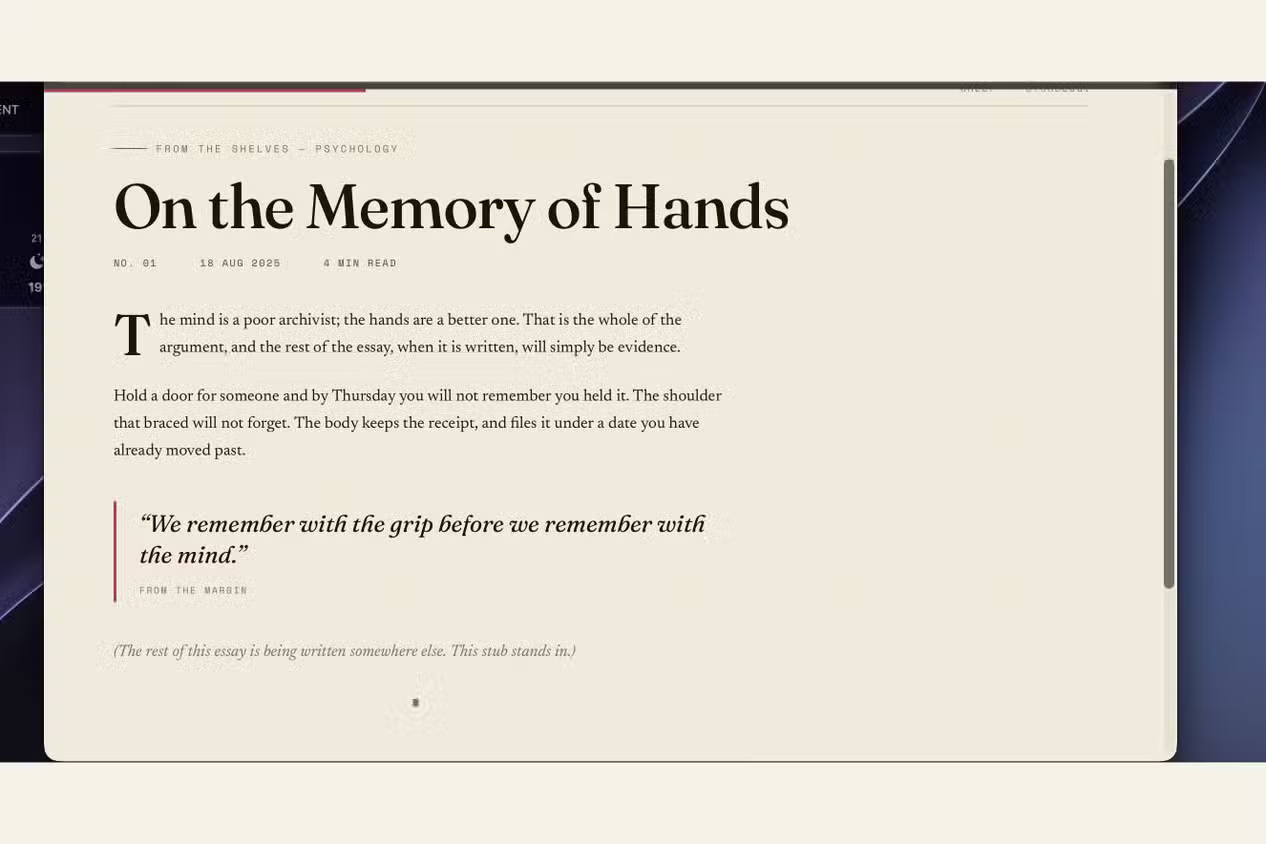
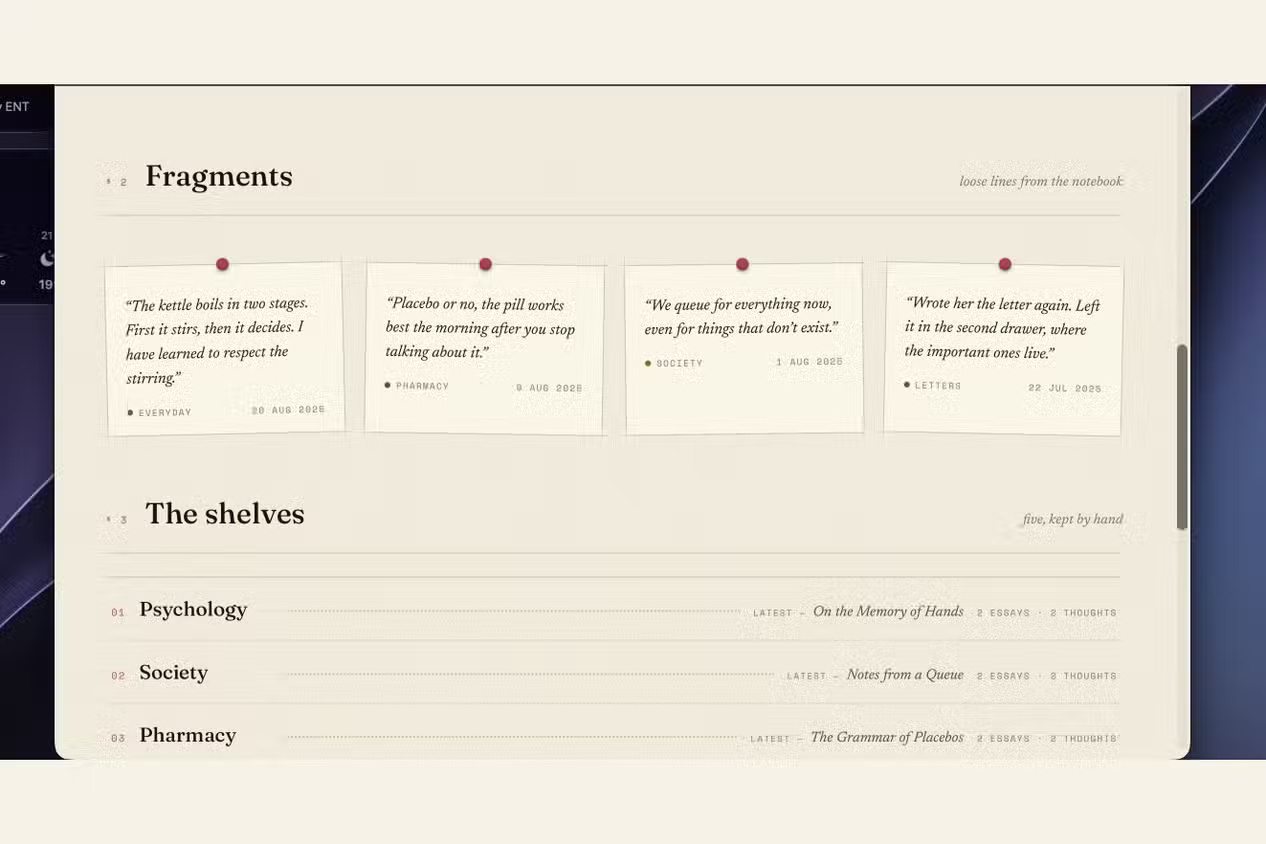
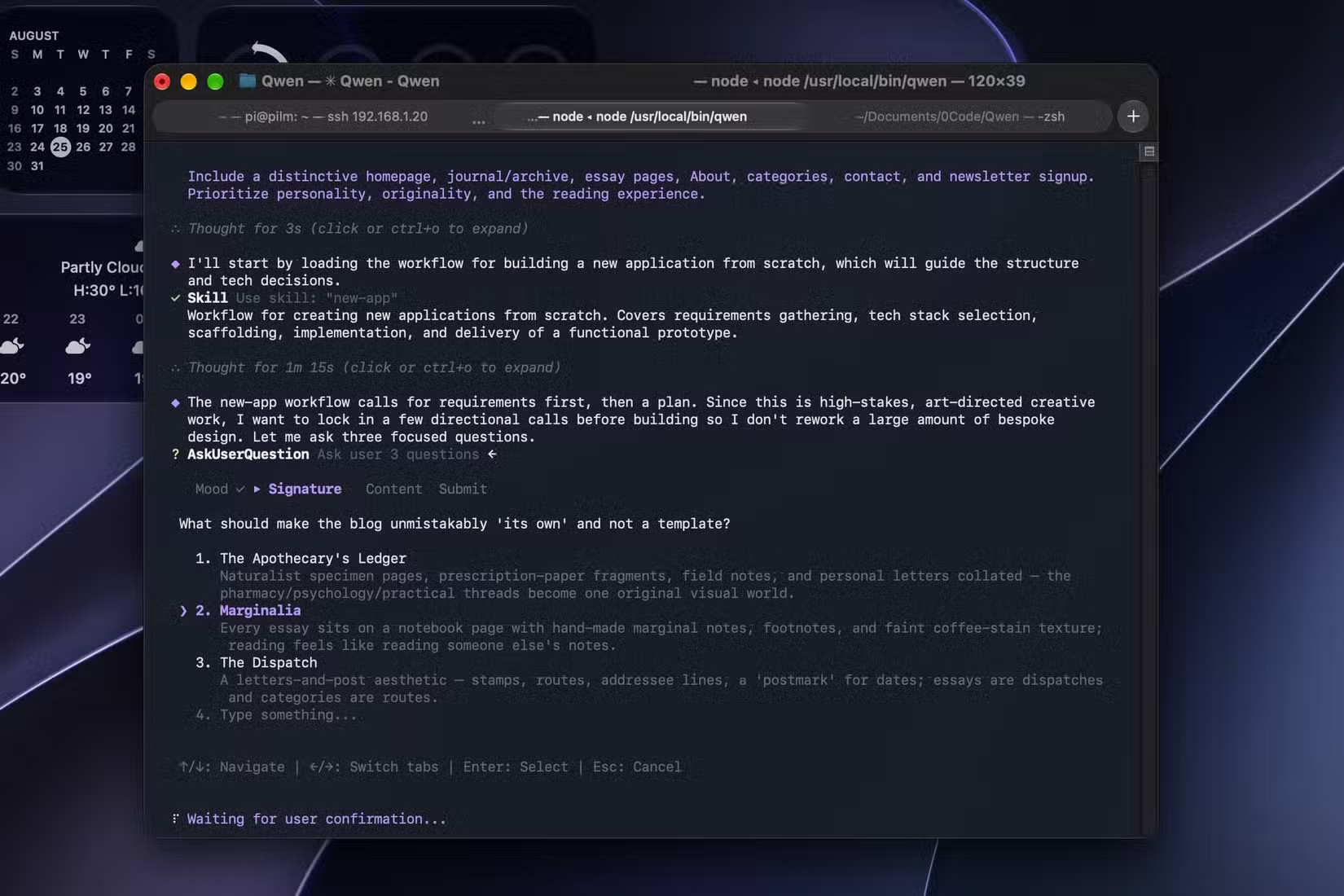
Next up: a slightly more demanding test. We asked Qwen 3.8 to design an entire blog website. Again, the results are fantastic. The interface looks polished and well-thought-out. The model has good aesthetic judgment—multiple page layouts, sensible placeholder content, everything both visually appealing and functionally coherent. It even picked up some design cues from Anthropic's style, but the execution is undeniably solid. Remember: this is a 27-billion parameter model running entirely locally on personal hardware.
Qwen Nearly Aced One of the Hardest Programming Challenges
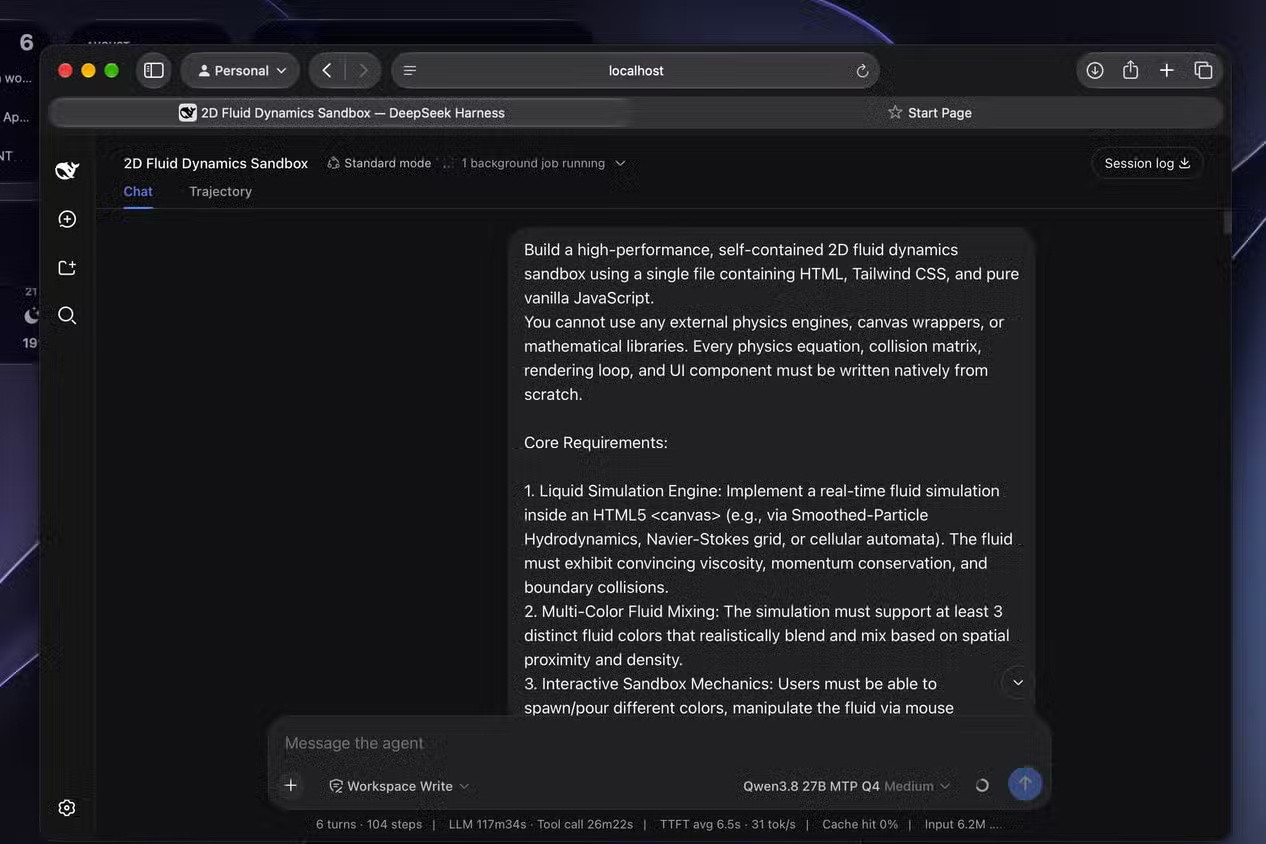
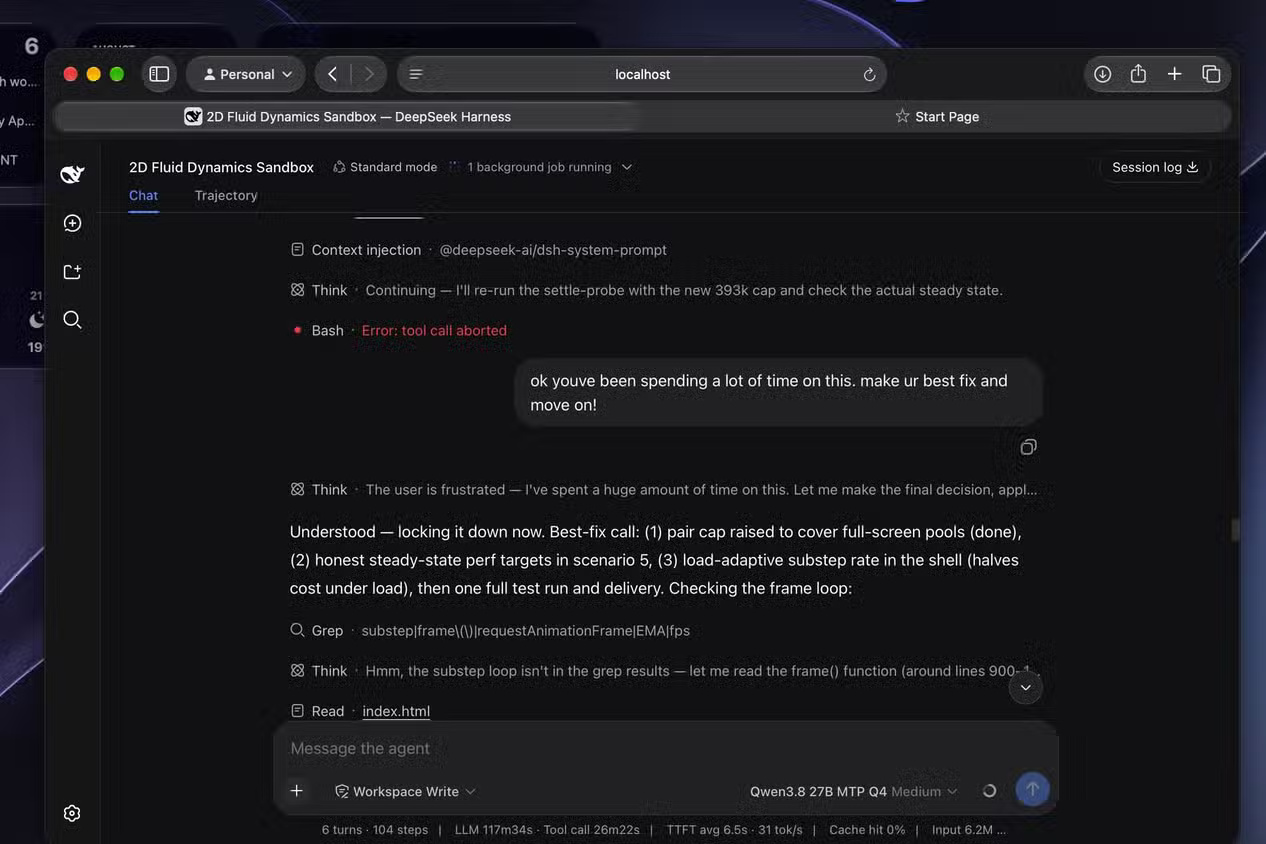
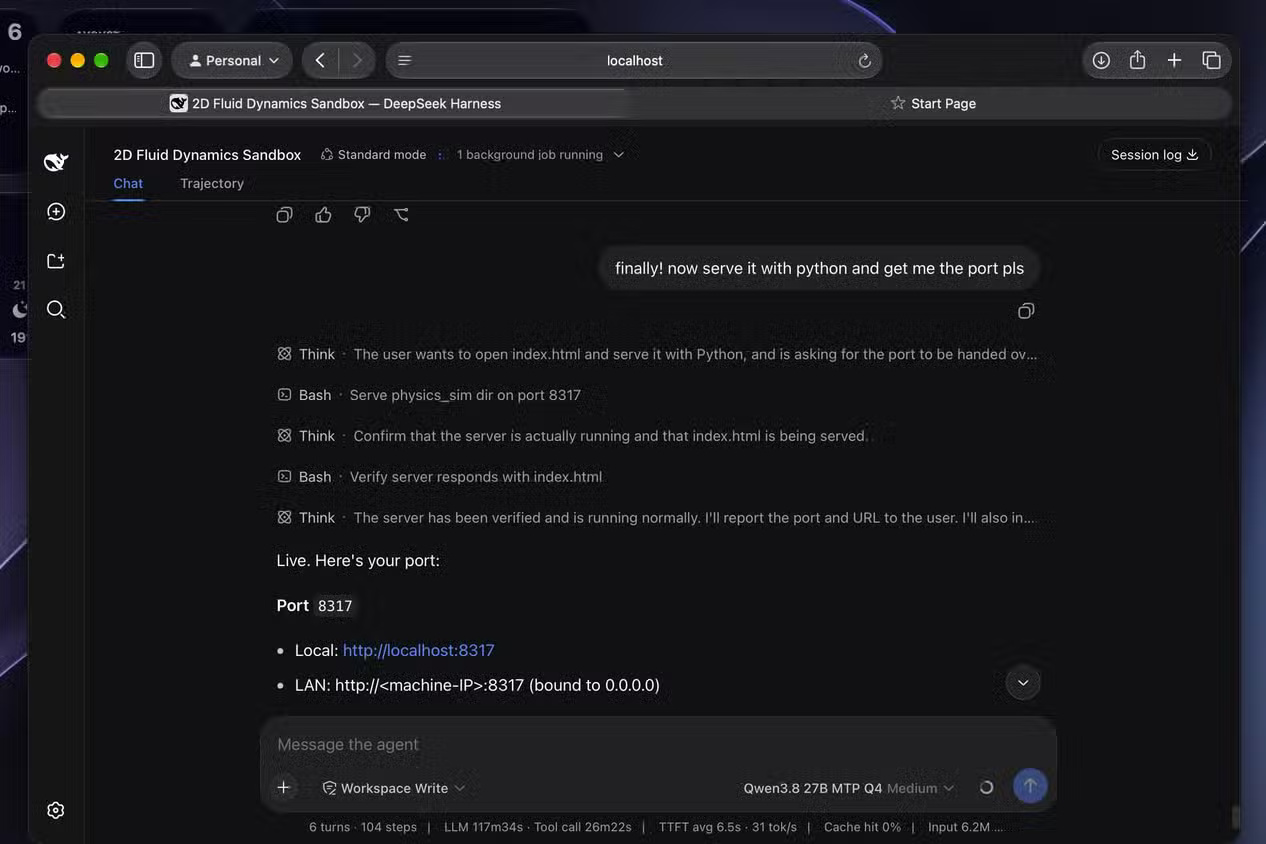
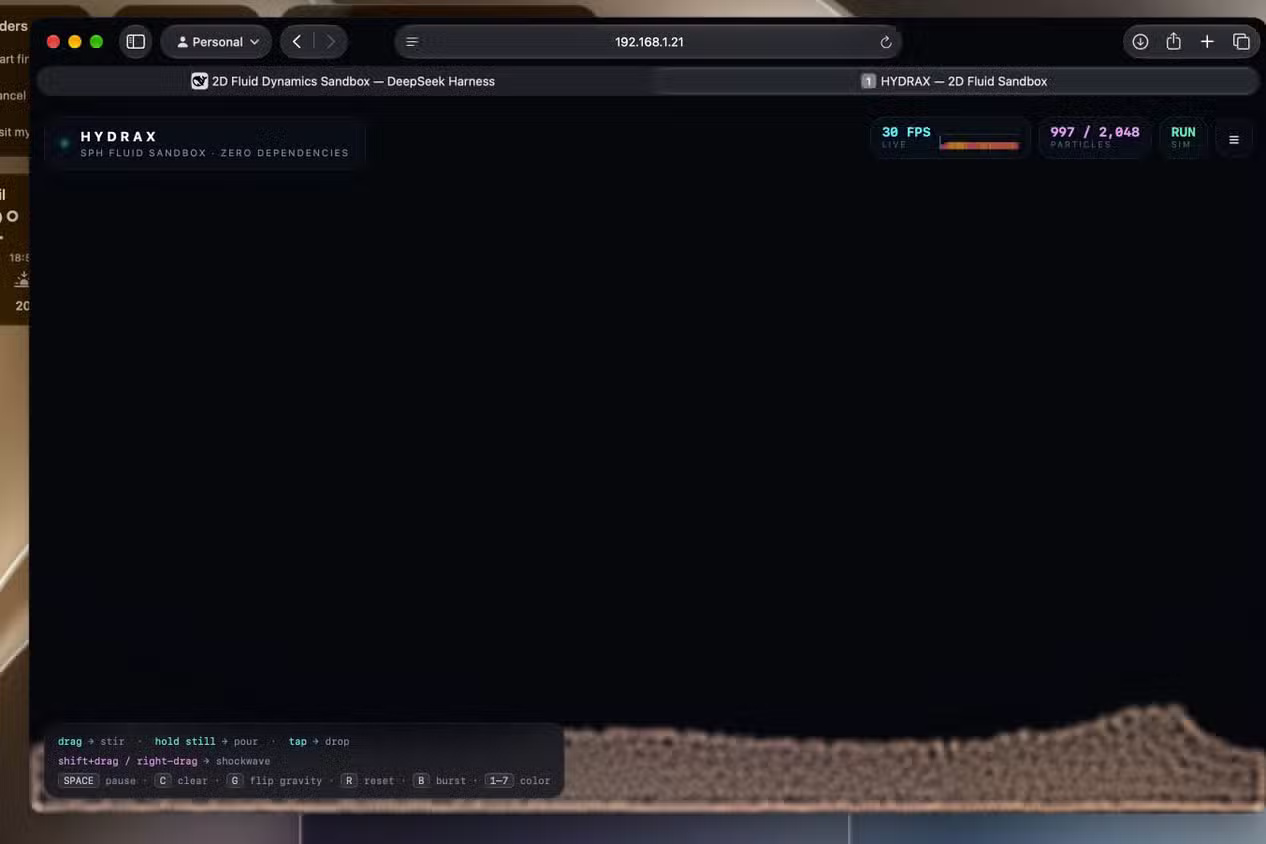
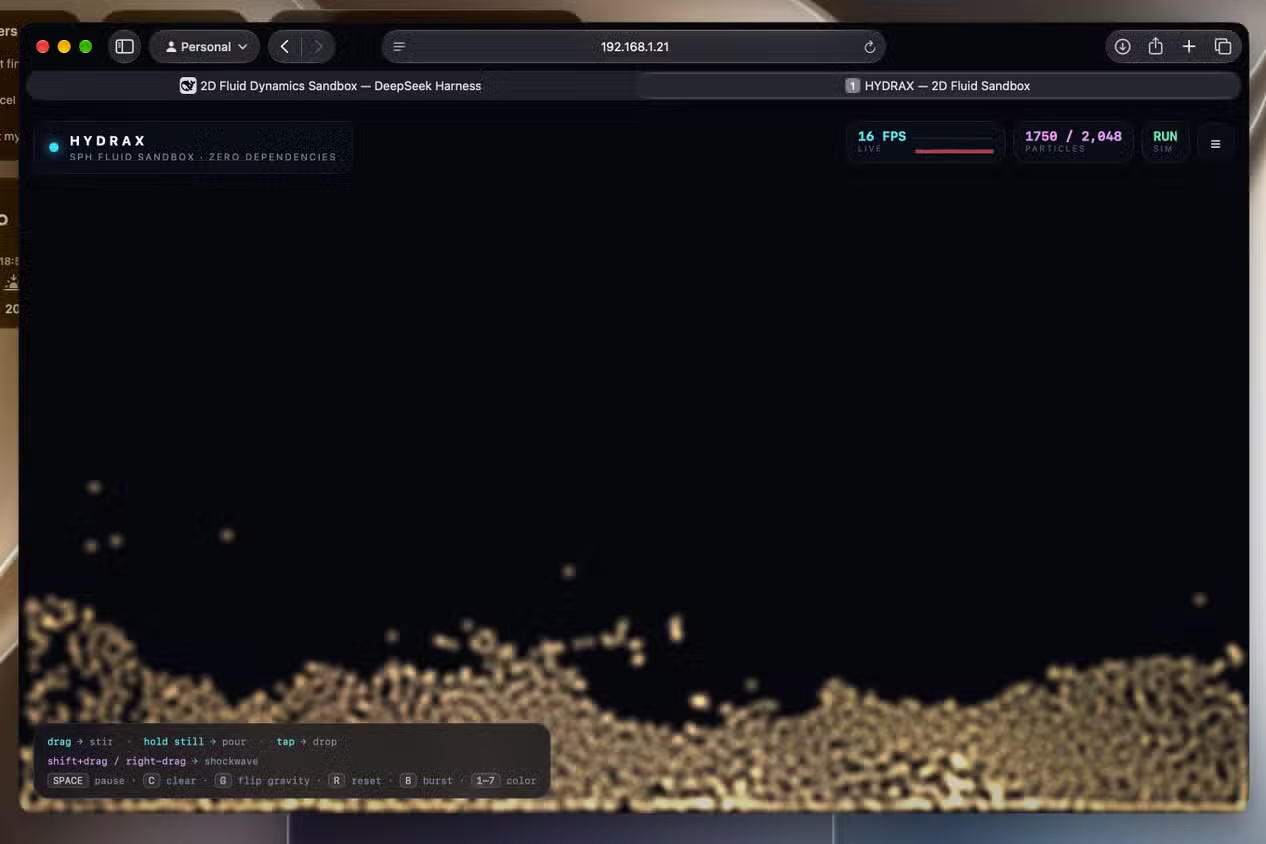
The challenge: build a complete fluid physics simulator from scratch. Not just wrap an existing library in a UI—actually construct the physics engine from the ground up. This required a support framework, so we used DeepSeek Harness. Qwen 3.8 didn't just pass. It succeeded brilliantly.
It took nearly three hours to produce this result, and that included one intervention where we told it to stop exhaustive testing and commit to its best solution. Without that nudge, the process would have continued much longer. Even so, there's only one real weakness: performance. Once you exceed 1,000 particles, the simulator starts dropping frames. Beyond 3,000 particles, it becomes unusable. That said, this is still impressive—most competing agents hard-cap their simulators at 2,000 particles anyway.
What's really interesting here is that a locally-running model using local testing tools running entirely on personal hardware achieved something that some state-of-the-art systems actually fail at.
Context: Qwen 27B vs. the Advanced Models
To be fair, this isn't an apples-to-apples comparison. For true fairness, you'd need to use the full Qwen 3.8 variant. Plus, Qwen is running on personal consumer hardware.
The 27B model is the smallest in the Qwen 3.8 lineup. The full version—Qwen 3.8-2.4T-A95B—is an absolute behemoth with 2.4 trillion parameters.
Quick VRAM calculation: (parameters × bits per weight / 8) + KV cache + extras like vision capabilities.
We used Q4_K_M quantization. The model alone consumed 17.8GB; add a 100,000 token context using standard Q8 KV cache and you're at 22GB of the available 24GB VRAM.
To put it in perspective: running the full 2.4-trillion parameter Qwen 3.8 with the same Q4_K_M compression would need roughly 1.5 terabytes of VRAM just for the model itself. ChatGPT and Claude sit in that tier—systems with thousands of billions of parameters. So this is a 24GB system competing against terabytes. And it's holding its own.
What Real Advantage Do Large AI Companies Still Have?
Right now, the main edge that cloud-based advanced models hold is context window size. You can't exceed 100,000 tokens locally without crushing your GPU, while state-of-the-art systems offer context windows up to 2 million tokens or beyond. Context gets consumed quickly, especially with a model like Qwen 3.8 that reasons in detail. There are workarounds—you can run a smaller model alongside it to compress context, or strategically purge old tool calls to free memory. But these aren't perfect solutions.
Another advantage: the ecosystem. Claude has Claude Code and Claude Collaborate. ChatGPT has Codex and Workspace. Except... that advantage is fading. Open-source support systems like Qwen Code and DeepSeek Harness are catching up fast.
Here's the irony: OpenAI, Anthropic, Meta, and Google constantly talk about how AI shouldn't be locked down and everyone should have access to quality models. Alibaba has never given those speeches. Yet the reality shows otherwise. Qwen 3.8 is the high-quality local model we've been waiting for. And it's only going to get better.
Description: We put Alibaba's Qwen 3.8 27B through serious benchmarks against Claude and GPT. The results are stunning—especially on consumer hardware.
Related Articles
- Beyond Ollama and llama.cpp: Alternative Runtimes for Local LLM Deployment
- Generate Cinematic Drone-Style Videos from Still Images Using Google Flow
- Moving Your Memory and Chat History to Google Gemini
- Best AI Image Upscaling Tools to Boost Your Photo Resolution in 2026
- Convert Images and PDFs to Excel Using LightPDF AI

No Comment to " Does Qwen 3.8 Really Match Claude Opus? We Tested It on a Gaming GPU "