Top 10 Agentic AI Platforms for Business in 2026

The agentic AI market is exploding. New vendors arrive every quarter, but only a handful can genuinely deliver at enterprise scale. What separates the real players from the hype? These platforms don't just run flashy demos—they power actual business processes, integrate seamlessly into complex tech stacks, and deliver measurable improvements in cost and reliability.
Table of Contents
Here are the 10 leading agentic AI platforms reshaping enterprise operations in 2026:
| Platform | Best For | Key Strengths |
|---|---|---|
| TrueFoundry | Enterprise AI operations | AI Gateway, governance, observability |
| LangChain Hub | Prototyping AI workflows | Modular workflows and integrations |
| Cognosys | Autonomous enterprise agents | Governance and monitoring |
| CrewAI | Multi-agent collaboration | Role-based agent workflows |
| AutoGen | Conversational AI agents | Agent-to-agent communication |
| UiPath | Enterprise automation | AI + RPA workflows |
| Relevance AI | Code-free AI agents | Visual workflow builder |
| Adept AI | Action-oriented AI agents | Software task automation |
| IBM Watson Orchestrate | Digital workforce automation | Enterprise integrations |
| Orby | Autonomous operations | Proactive workflow automation |
1. TrueFoundry
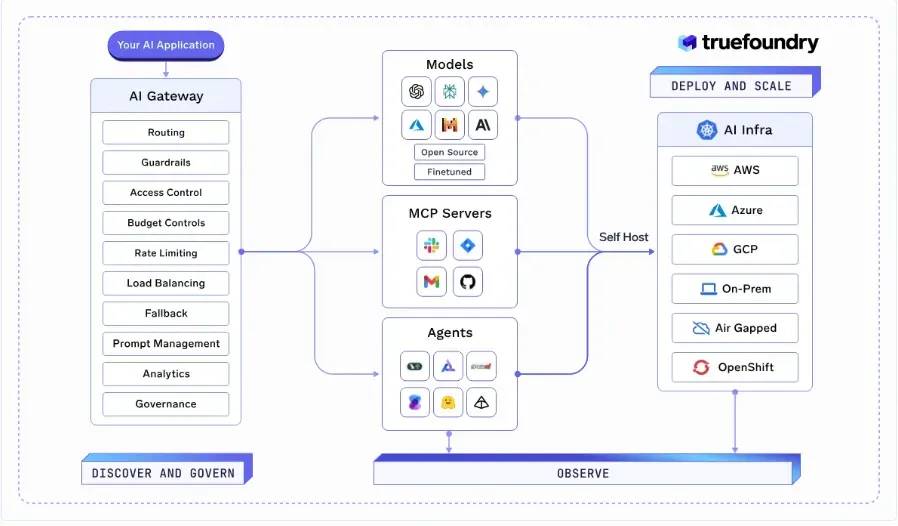
TrueFoundry is a full-stack enterprise platform built for deploying and running agentic AI systems at scale. It equips teams to build AI agents, manage models, control infrastructure, and monitor real-world workloads—all from one unified environment.
Unlike lightweight orchestration tools or standalone model gateways, TrueFoundry consolidates deployment, governance, observability, and scaling into a single production-ready platform. It's purpose-built for companies running serious AI applications at enterprise scope.
2. LangChain Hub
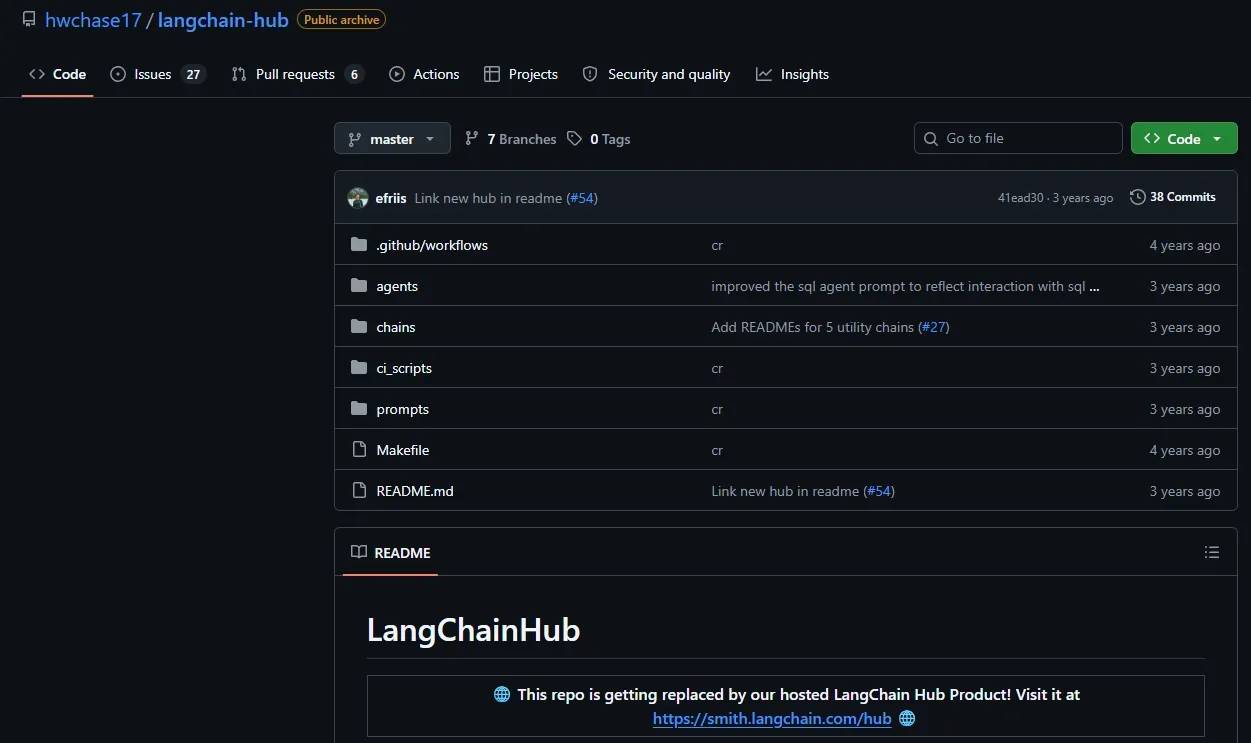
LangChain Hub is a collaborative platform for building, managing, and sharing LLM-powered workflows and agentic AI applications. It helps developers organize prompts, chains, tools, and agents in reusable, reproducible patterns—making experimentation and deployment significantly smoother.
The platform gained traction with teams prototyping AI assistants, retrieval-augmented generation (RAG) pipelines, and autonomous agents using the broader LangChain ecosystem.
3. Cognosys
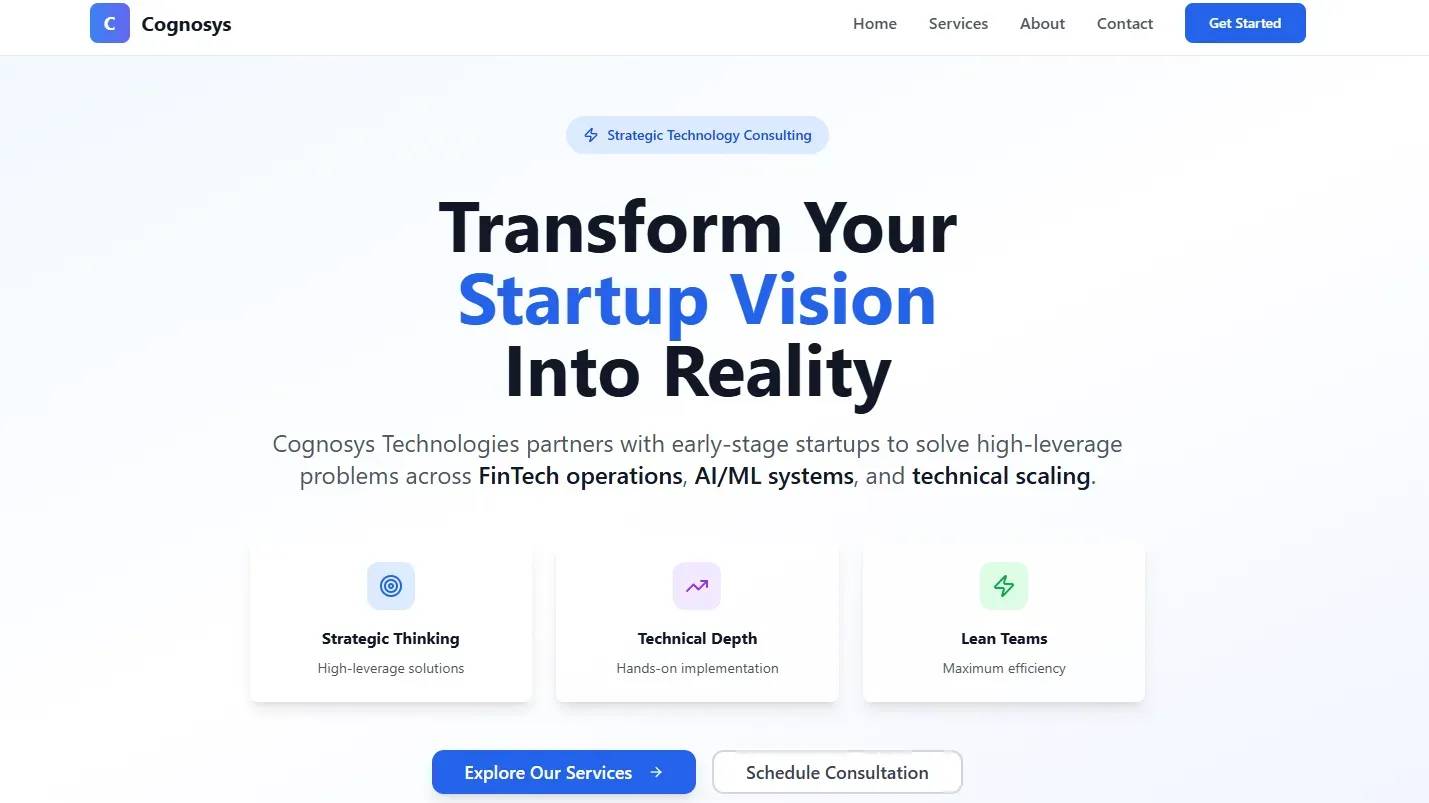
Cognosys delivers an agentic AI platform built for enterprises that want autonomous systems capable of planning, reasoning, and executing tasks across business processes. It emphasizes governance, observability, and secure orchestration—making it the right fit for regulated industries and production-scale AI operations.
Cognosys enables organizations to create AI agents that break goals into multi-step tasks, interact with business APIs and tools, and auto-execute workflows. The platform continuously monitors agent behavior, tracks all actions and costs, and enforces enterprise controls to maintain reliability, compliance, and decision oversight throughout execution.
4. CrewAI
CrewAI is an open-source framework for building collaborative multi-agent systems. It lets developers assemble specialized AI agents that coordinate to solve complex problems through aligned reasoning, planning, and execution. It's widely adopted for research automation, operations, coding support, and enterprise AI orchestration.
What makes CrewAI interesting is its role-based approach. Developers assign specific roles, goals, and responsibilities to each agent—researcher, planner, analyst, executor—and they collaborate within a shared workflow. Agents exchange context, delegate subtasks, and coordinate actions to accomplish larger objectives. The framework supports Python customization, external tool integration, and flexible orchestration logic, ready for real-world deployment.
5. AutoGen
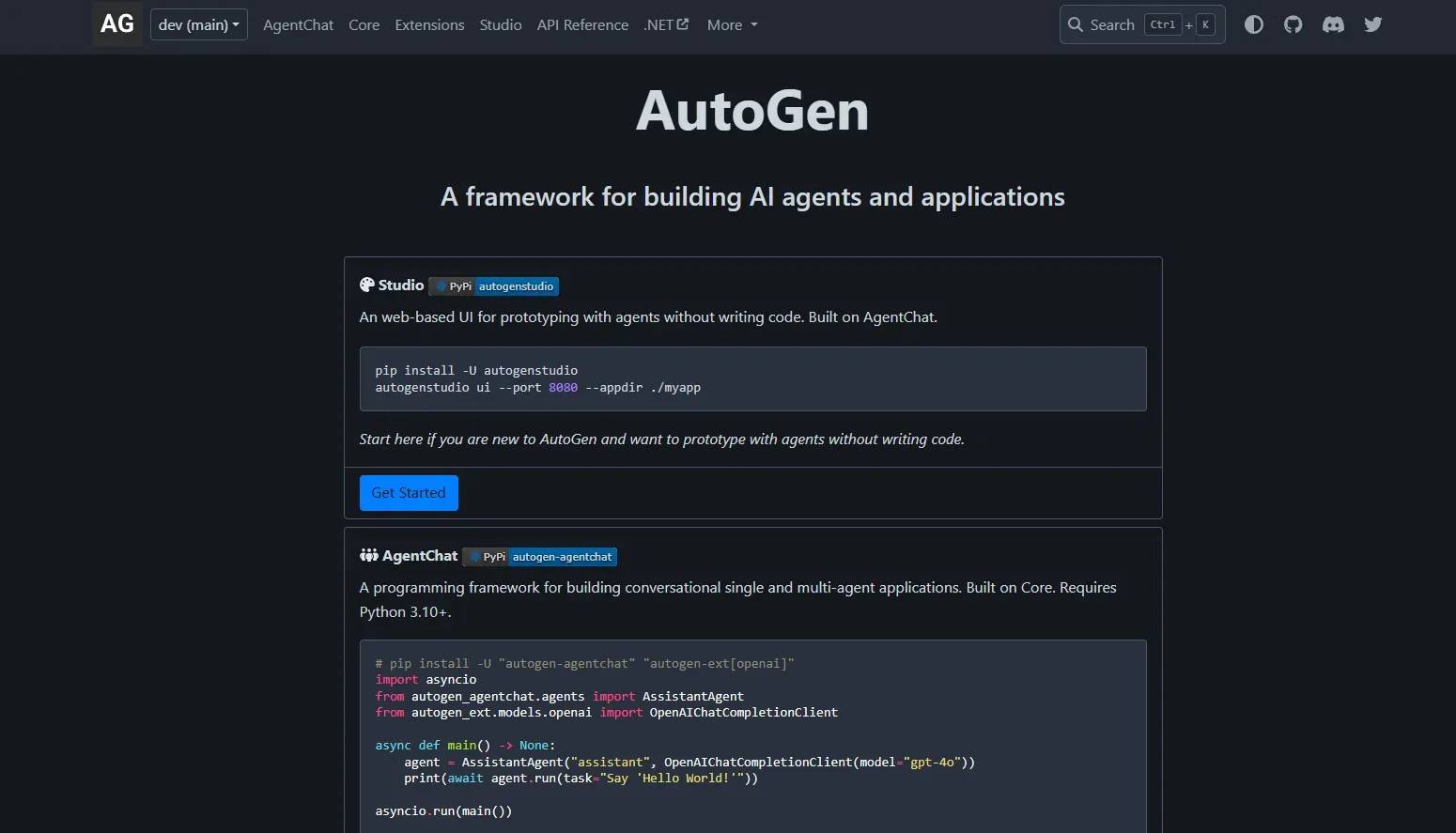
AutoGen is Microsoft's open-source multi-agent AI framework designed to build collaborative and conversational AI systems. It enables multiple agents powered by large language models to communicate with each other, engage with humans, and leverage external tools to solve complex tasks across enterprise workflows and research applications.
AutoGen lets developers create specialized AI agents that coordinate through structured conversations. These agents can exchange information, delegate work, call APIs, execute code, and interface with business systems while maintaining context across the entire workflow. The framework supports custom orchestration models, human-in-the-loop mechanisms, and external tool integration—essential for scaling real-world deployments.
6. UiPath
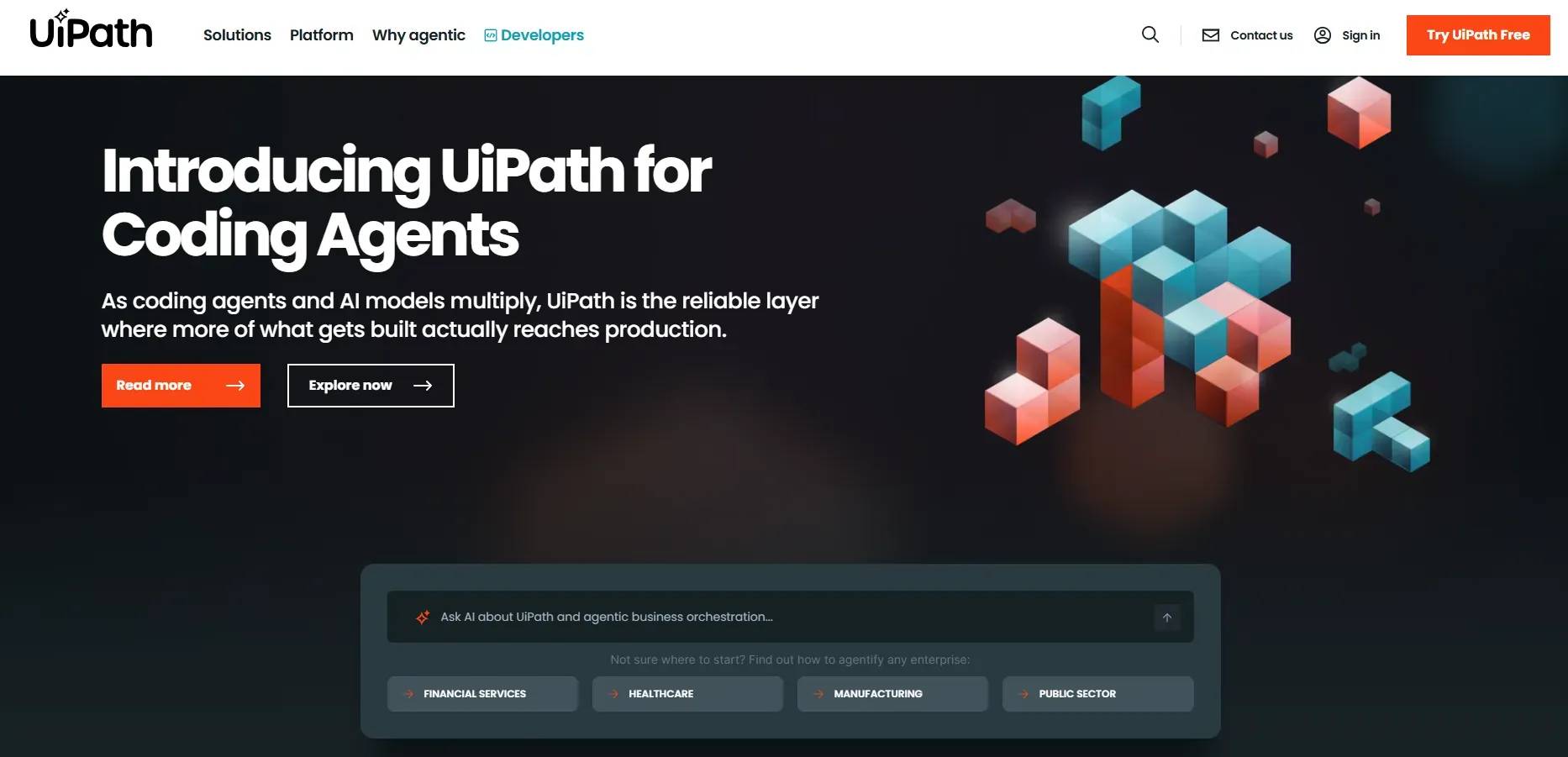
UiPath is an enterprise automation platform that merges robotic process automation (RPA) with agentic AI capabilities. By layering AI reasoning into automation workflows, UiPath enables organizations to automate complex business processes—handling both structured and unstructured data—across their entire enterprise ecosystem.
UiPath deploys AI agents alongside traditional RPA bots to analyze information, make context-aware decisions, and auto-execute workflows. These agents interact with business applications, process documents, trigger actions across multiple systems, and coordinate with humans when needed. Deep integrations with ERPs, CRMs, and productivity tools help optimize operations at scale.
7. Relevance AI
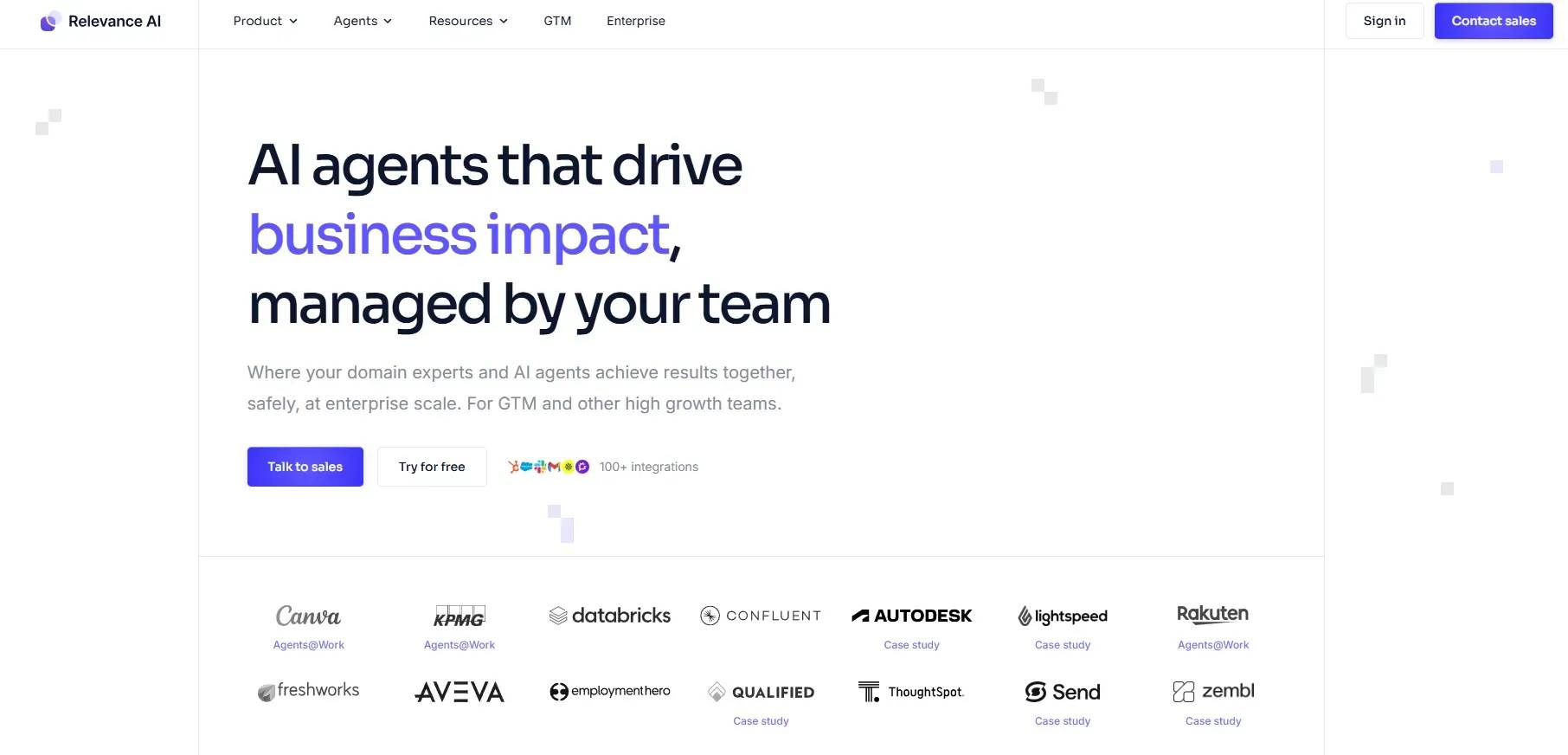
Relevance AI is a no-code/low-code platform for building, deploying, and managing agentic AI workflows. It lets teams rapidly prototype and move AI agents into production with minimal technical overhead. That's why it's gaining traction with organizations trying to scale AI across both technical and non-technical teams.
Relevance AI provides a visual workflow builder where users design multi-step AI sequences via drag-and-drop components. Its AI agents can reason, retain memory, call external tools, and automate workflows across different business systems. The platform includes collaboration tools, analytics, deployment controls, and monitoring features to support enterprise-grade AI operations.
8. Adept AI
Adept AI builds action-oriented AI agents designed to operate software applications, APIs, and digital tools the way users do. The real concern is that most chatbots just talk. Adept flips the script—it focuses on enabling AI systems to execute actual tasks within enterprise workflows and productivity platforms.
Adept trains AI agents to understand interfaces, interact with software systems, issue commands, and automate multi-step digital processes. These agents navigate applications, use APIs, and complete operational tasks while keeping context alive throughout execution. Human-in-the-loop controls let enterprises monitor actions, validate outputs, and ensure compliance during automation.
9. IBM Watson Orchestrate
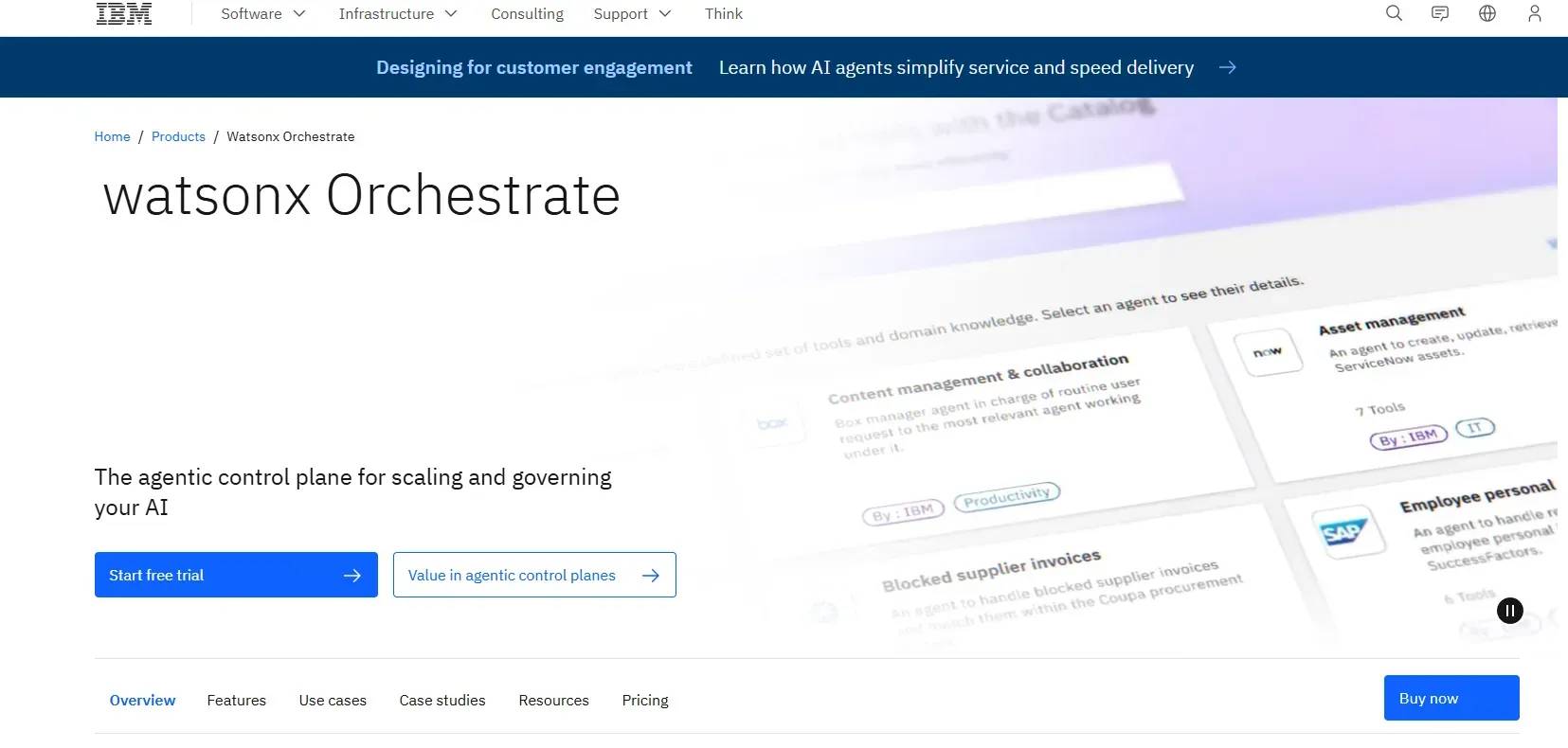
IBM Watson Orchestrate is an AI-powered digital worker platform designed to automate business processes and operational tasks. It combines natural language understanding, reasoning, and enterprise system integration to help organizations streamline repetitive work across departments.
Watson Orchestrate deploys AI-driven digital workers to understand user requests, interact with business applications, and execute multi-step workflows. These digital agents handle tasks like scheduling meetings, processing HR workflows, generating reports, and retrieving data from connected systems like CRMs, ERPs, and collaboration platforms—all without complex coding or heavy manual intervention.
10. Orby
Orby AI is an autonomous agentic platform designed to execute workflows and automate enterprise operations. It focuses on enabling AI agents to monitor systems, make proactive decisions, and act with minimal human intervention—while maintaining transparency, explainability, and enterprise-grade trust.
Orby deploys autonomous AI agents that continuously observe business systems, analyze operational signals, and proactively trigger actions when they detect issues or optimization opportunities. The platform emphasizes explainable AI by logging decisions, actions, and agent reasoning—giving enterprises the visibility, governance, and compliance confidence they need across all automated workflows.
Description: Discover the leading agentic AI platforms transforming enterprise operations. Compare features, strengths, and use cases for 2026.
Related Articles
- How Claude Code Solves Claude's Biggest Problem With Just One Prompt
- Google Now Lets You Share Gemini Gems — What Does This Mean for AI Teamwork?
- Why Gemma 4 Is Becoming the Top Free On-Device Chatbot for Your Phone
- How to Manage Your iCloud Mail Directly Through ChatGPT
- How to Generate Automatic Document Summaries in Google Docs

No Comment to " Top 10 Agentic AI Platforms for Business in 2026 "